


Dripping Hood, Sticky Tables? Here’s the Right Kitchen Degreaser for a Restaurant
The hood is dripping, the worktop is sticky and the floor near the range is slippery, even though it was cleaned this morning. In restaurant, hotel and catering kitchens, grease really does build up every shift. Scrubbing harder with dishwashing liquid is often not enough. What you need is a kitchen degreaser: a grease-removing cleaner designed to lift oil from hard surfaces, not to wash dishes.
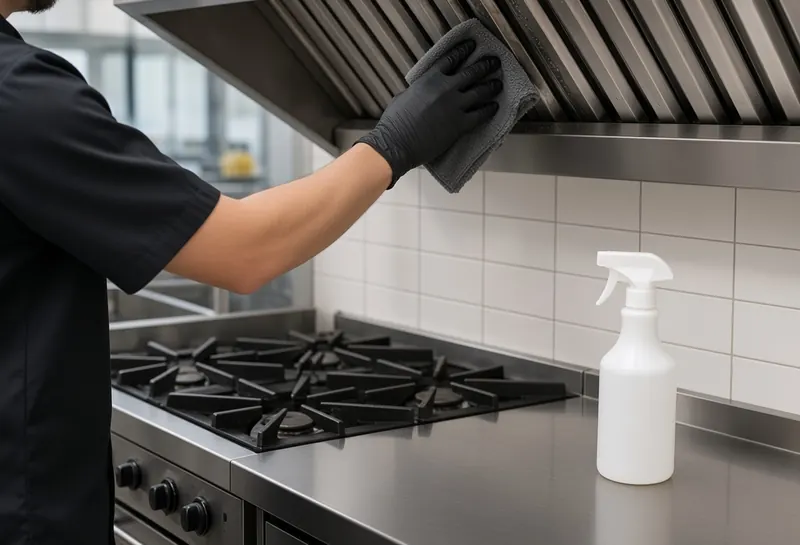
What is a kitchen degreaser?
A kitchen degreaser, also often called a kitchen grease remover or degreaser liquid, is a cleaning chemical for lifting oil, fat and greasy soil from kitchen surfaces. In English, the same product group is commonly called a kitchen degreaser.
In a commercial kitchen, the soil is rarely just a fresh spill. Grease vapour rises into the hood, settles on the walls and the ventilator grille, then drops back onto tables and the floor. Because of the heat from the range and oven, this thin film hardens. If it is only cleaned now and then, staff end up fighting a baked-on deposit, not the daily grease.
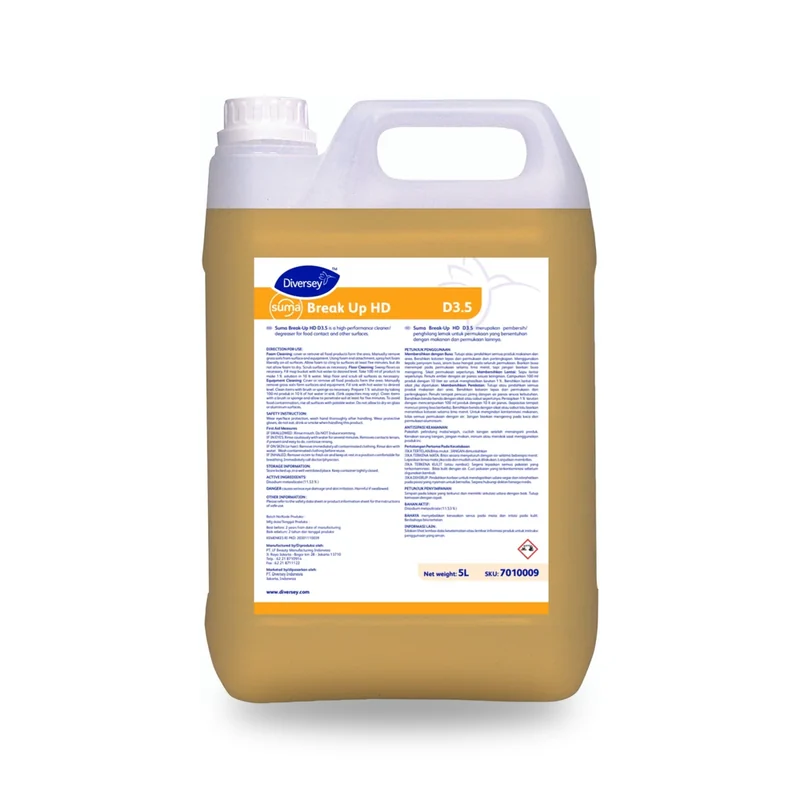
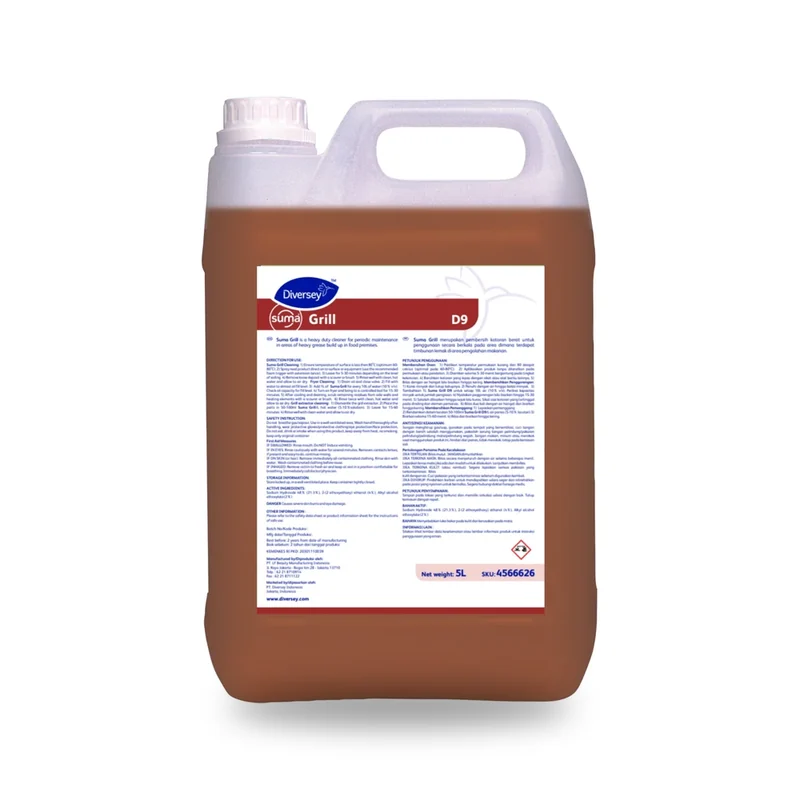
Almost every professional kitchen degreaser is alkaline (alkali). An alkaline solution helps break down and emulsify grease so the soil can be rinsed away with water. That is why the degreaser products in the Diversey catalogue we distribute, such as Suma Break Up D3.5 and Suma Grill D9, are classed as alkali/alkaline. A fuller explanation of acid, neutral and alkaline products is in the guide to types of professional cleaning chemicals.
The consequence is also clear: wear gloves and eye protection, do not mix the product with anything else, and always read the warnings on the label before use.
How is it different from dishwashing liquid and an ordinary kitchen cleaner?
Many kitchens still use one bottle for everything: plates, tables, the hood, even the oven. That is one reason the grease seems to come back so quickly. The functions are different.
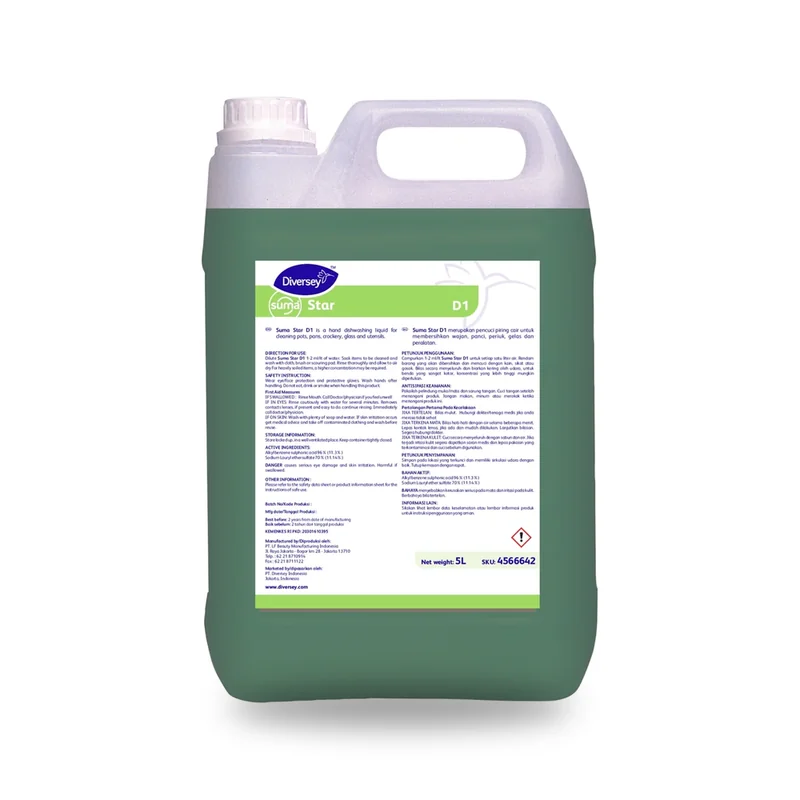
- Dishwashing liquid such as Suma Star D1 is a concentrated manual dishwash for pots, pans, crockery, glasses and cutlery. It is effective in the sink, but it is not a substitute for a degreaser on a hood, wall or worktop coated with grease vapour.
- A household kitchen cleaner is usually a ready-to-use spray. Convenient for light marks in a home kitchen. A restaurant kitchen that runs from morning to night needs a professional concentrate with an adjustable dose, plus the same working method for every shift.
- A kitchen degreaser is used on greasy hard surfaces: worktops, walls, hoods and equipment. For black carbon deposits on ovens and grills, you need a dedicated oven cleaner, not a daily degreaser.
So searching for a “restaurant kitchen degreaser” or a “degreaser liquid” should lead you to a product that matches the type of soil and the work area, not to one miracle bottle for the whole kitchen.
When does a restaurant kitchen need a professional degreaser?
Use a professional kitchen degreaser if signs like these are already appearing:
- The worktop feels sticky again a few hours after it was cleaned.
- The hood or ventilator grille is dripping.
- The floor near the cook area is slippery because of a grease film, not just water.
- Staff scrub for a long time, but the mark only moves onto the cloth.
In restaurants, hotels, catering and food plants, the volume of grease is far higher than in a home kitchen. A concentrate such as Suma Break Up D3.5 (2x5L pack) is designed as a grease remover for soil, oil, animal protein and blood on hard surfaces. That is the claim in its product catalogue, not a promise that one liquid will cover every area of the kitchen.
If what has built up is a black deposit on an oven or grill, switch to a carbon remover. Suma Grill D9 is an oven and grill carbon remover with maximum penetration of carbon deposits, also in a 2x5L pack and alkali/alkaline.
Sanitra is an Authorized Distributor of Diversey in Indonesia. Both products are supplied in Diversey factory packaging. To tell original supply apart, also read how to buy original Diversey products.
Choose according to the problem, not one bottle for everything
The right kitchen degreaser depends on the soil and the surface. In short:
| Problem | Not this | The right product |
|---|---|---|
| Fat and oil on tables, walls, hoods and hard surfaces | Dishwashing liquid | Suma Break Up D3.5 |
| Carbon deposits on ovens and grills | An ordinary daily degreaser | Suma Grill D9 |
| A greasy kitchen floor | A table degreaser poured into the mop bucket | Suma Bio-Floor |
| Pots, pans and plates (manual wash) | A surface degreaser | Suma Star D1 |
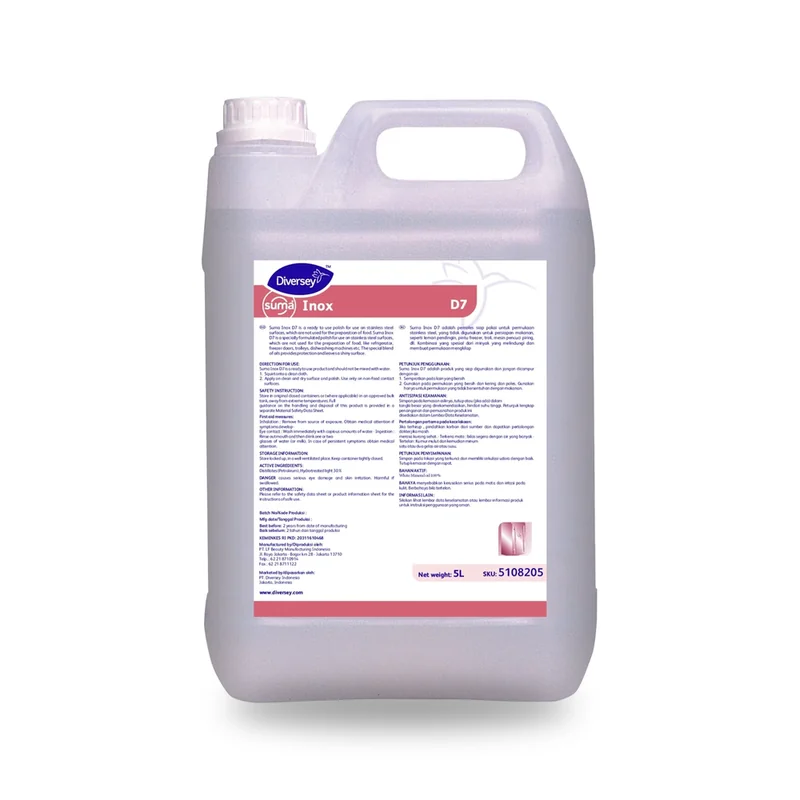
| Stainless that looks dull after cleaning | Scrubbing with a coarse sponge | Suma Inox D7 (a polish, not a degreaser) |
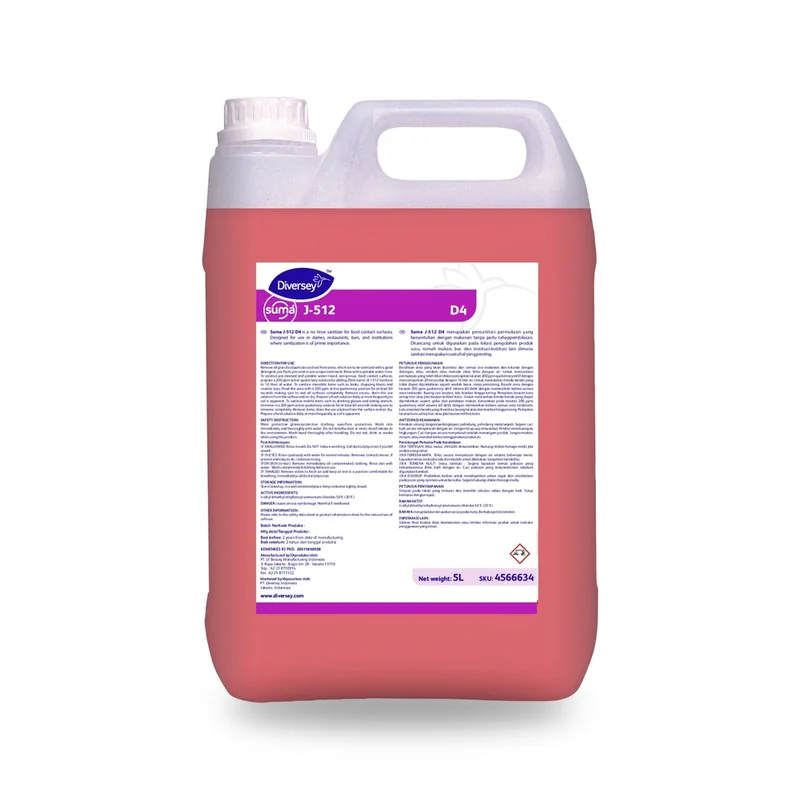
| A food-contact surface that needs sanitizing | Mixing a degreaser with a sanitizer | Clean first, then Suma J512 if your programme requires it |
Suma Bio-Floor is a no-rinse floor cleaner and deodoriser with non-pathogenic bacteria, surfactants and solvent. Suma Inox D7 is a stainless-steel polish that forms a protective layer and brightens the surface. Both are often used in the kitchen, but they are not a substitute for a degreaser on a greasy hood and worktop.
A fuller map by task is in the articles on kitchen grease-remover cleaners and the restaurant kitchen cleaner list by task. All the related products are also gathered in the kitchen specialty cleaners and warewashing categories.
How to use a kitchen degreaser safely
Always follow the product label. The general steps below summarise the method we have already written in the grease-remover guide, and they do not replace the manufacturer’s directions.
- Switch off and cool any hot equipment. Do not spray a surface that is still hot, unless the label allows it.
- Scrape or wipe leftover food and excess grease so the chemical works on the film that is stuck, not on a thick spill.
- Prepare the solution at the dose on the label. A concentrate only saves money if it is diluted correctly. Too dilute and the mark stays; too strong and you can damage the surface and waste product. See how to calculate dilution.
- Wear gloves and eye protection. A professional kitchen degreaser is generally alkaline.
- Apply it, allow the labelled contact time, then agitate with a tool that will not damage the surface.
- Rinse if the label requires it. For food-contact surfaces, follow with sanitizing if your food-safety programme requires it, then leave the surface to dry.
Do not mix it with other products, especially an acid cleaner or a chlorinated product. Mixtures like that can be hazardous. Read the danger of mixing cleaning chemicals.
If you are unsure about the surface material, test a small area first. Aluminium and some painted surfaces can be damaged by a strong alkali.
Mistakes that often happen in a restaurant kitchen
- Using dishwashing liquid on the hood and walls, then wondering why the grease is back within a day.
- Pouring a thicker degreaser “to make it stronger”, when the dose should follow the label.
- Spraying an oven cleaner onto a surface that is still hot, unless the label allows it.
- Storing the solution in an unlabelled mineral-water bottle, so the next shift does not know what is in it.
- Skipping daily cleaning until the grease hardens into a deposit, which then needs an oven cleaner.
A little every day is usually far lighter work than a major battle every month. A simple per-shift, daily and weekly schedule is in the restaurant kitchen cleaning schedule.
After the grease is lifted, then sanitize
A kitchen degreaser’s job is to lift oil and soil. That is a cleaning step, not disinfection. Soil left behind can get in the way of a sanitizer or disinfectant, so the order is: lift the grease first, then sanitize food-contact surfaces if required.
Suma J512 is a high-concentration no-rinse sanitizer for surfaces, including food-contact surfaces. Use it as the label and your kitchen hygiene programme direct, not as a substitute for a degreaser.
Where can you buy an original Diversey kitchen degreaser?
Sanitra is an Authorized Distributor of Diversey. Suma Break Up D3.5 and Suma Grill D9 are supplied in Diversey factory packaging (2x5L). For pricing, availability, a demo and kitchen-staff training, contact the Sanitra team or see our solutions for restaurants & F&B.
The bottom line: the right kitchen degreaser is not the thickest or the most heavily fragranced. What you need is a product that matches the type of soil, a dose that follows the label, and tidy working habits every shift.
Quick questions
What is a kitchen degreaser? A kitchen degreaser is a grease-removing cleaner for lifting oil, fat and greasy soil from hard kitchen surfaces, for example worktops, walls and hoods.
How is a kitchen degreaser different from dishwashing liquid? A manual dishwash such as Suma Star D1 is designed for tableware. For a hood, wall or table coated with grease vapour, a dedicated degreaser is usually more effective.
Which kitchen degreaser is suitable for a restaurant kitchen? For fat and oil on hard surfaces, our catalogue uses Suma Break Up D3.5, a concentrated Diversey grease remover. There is no single product for every kitchen area.
Can a kitchen degreaser be used on an oven or grill with a black deposit? If what has built up is a carbon deposit, use a dedicated oven and grill cleaner. Suma Grill D9 is an oven and grill carbon remover with maximum penetration of carbon deposits.
How do you use a kitchen degreaser safely? Cool the equipment, remove excess soil, dilute as the label directs, wear personal protective equipment, allow contact time, then rinse if the label requires it. Do not mix it with other chemicals.
Is a kitchen degreaser safe on stainless steel? Follow the product label and test a small area if you are unsure. A strong alkali can damage aluminium and some painted surfaces. After cleaning, stainless can be cared for with a polish such as Suma Inox D7.
Where can I buy an original Diversey kitchen degreaser? Sanitra is an Authorized Distributor of Diversey. Contact WhatsApp 0813-1256-256 for pricing and availability, or see Suma Break Up D3.5.