


Meant to Work Better, But It Backfires: The Danger of Mixing Cleaning Chemicals
“Just mix the two, so the soil comes off faster.” You hear this often in the chemical store, and that is exactly where the problem starts. The danger of mixing cleaning chemicals is real: some combinations can produce a gas that irritates the airways.
Three combinations you must avoid
- A chlorinated product (bleach) + an acid product, for example a toilet cleaner or a descaler. This mixture can release chlorine gas that irritates the respiratory tract.
- A chlorinated product + ammonia. This combination can form chloramine gas.
- An acid product + a strong alkaline product. The two react, generate heat, and in the end neither one works properly.
So “stronger” is just a myth. What you actually get is something more hazardous — and more wasteful.
Know which products are acid and which are chlorinated
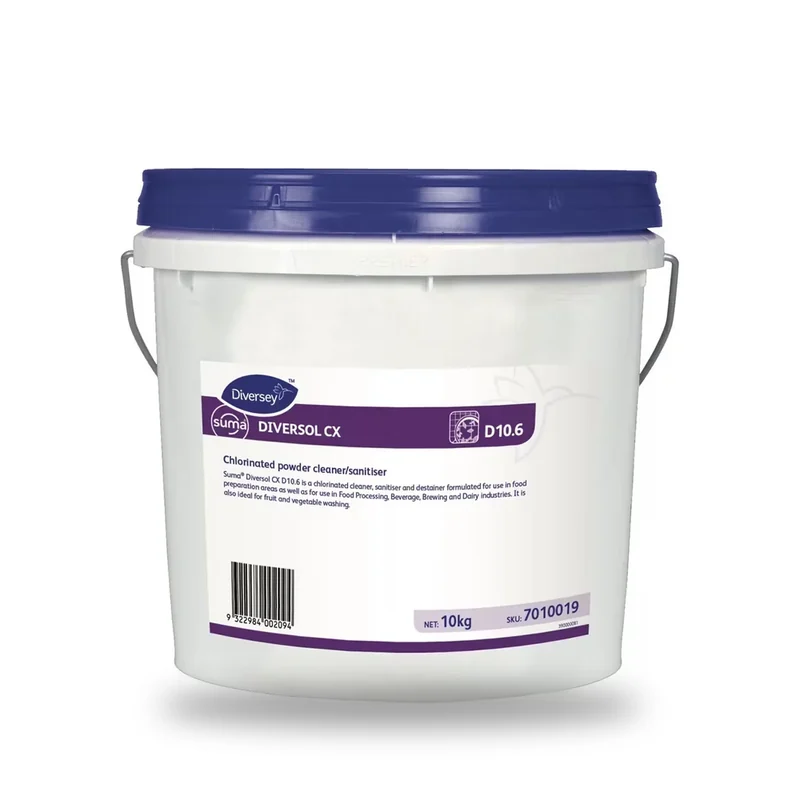
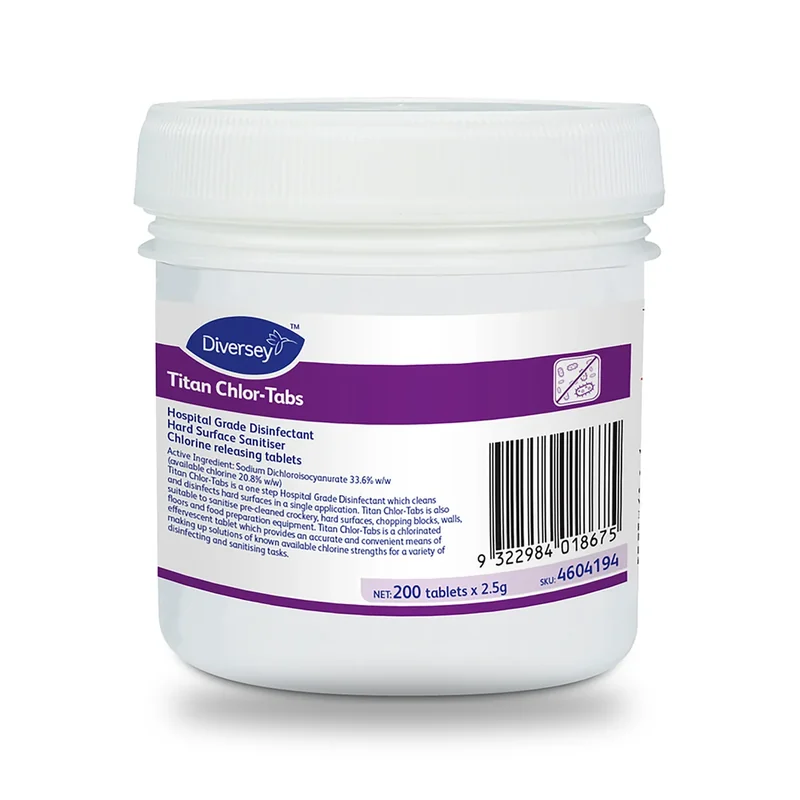
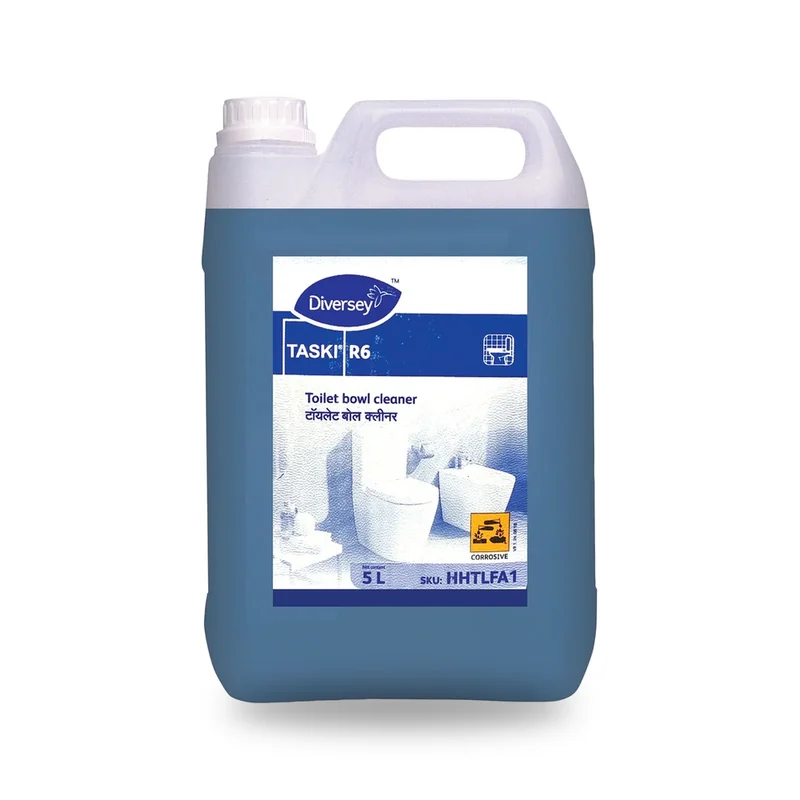
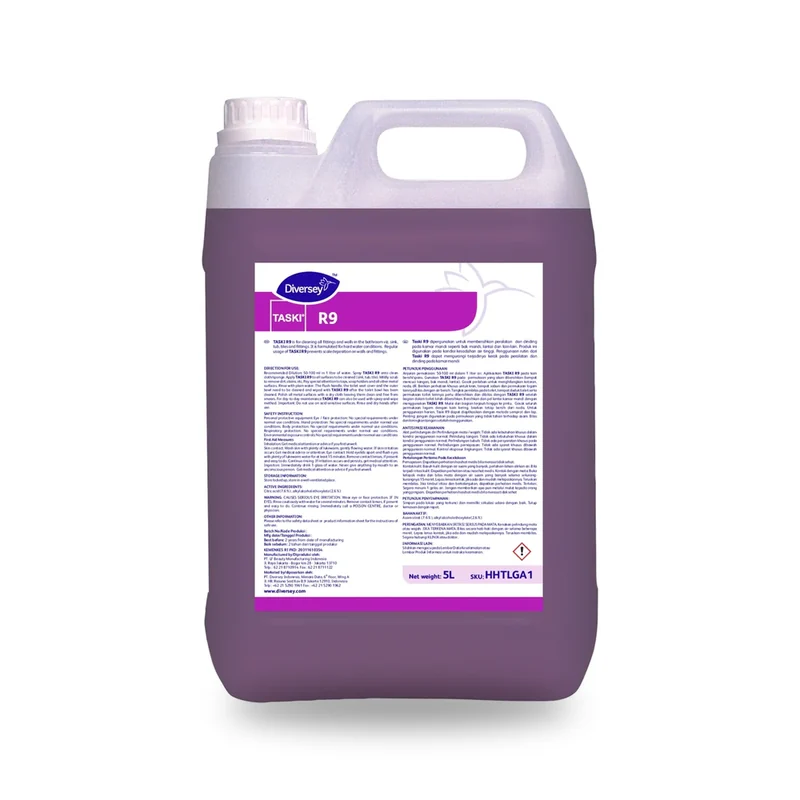
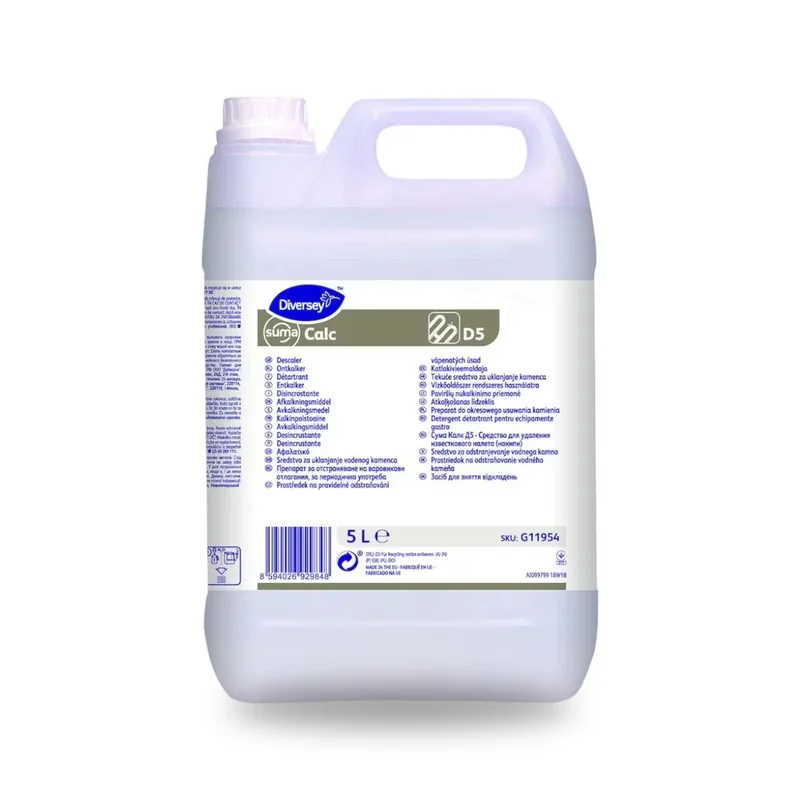
In our catalogue, examples of chlorinated products are Diversol CX and Suma Titan Chlor Tab. Examples of acid products are TASKI R6, TASKI R9 and Suma Cal-X.
The rule is simple: do not use products from these two groups together, or one after the other on the same surface without rinsing in between. Not sure of each product’s chemistry yet? Start with types of professional cleaning chemicals.
What does a safe chemical store look like?
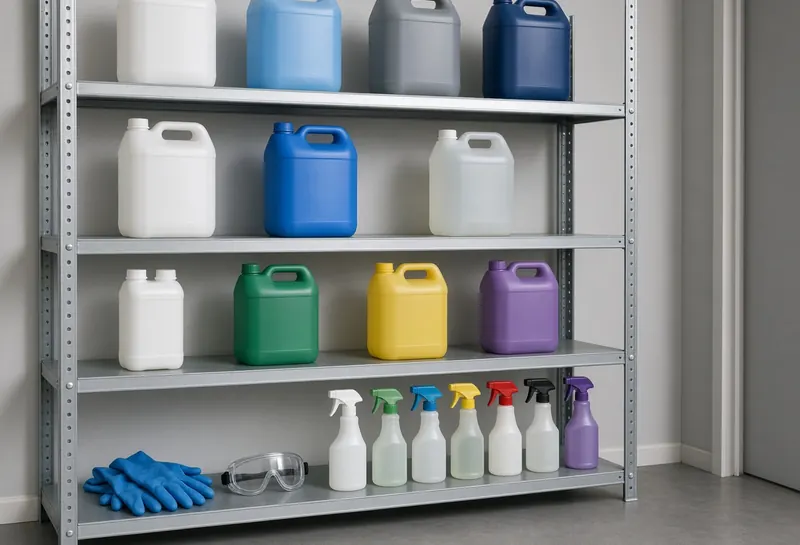
Picture a tidy storeroom: every jerry can is still in its original pack, the label is readable, and the shelves are separated by product type. That is not just neat — it also helps prevent accidents.
- Keep products in their original labelled packaging. Never decant a chemical into a drinks bottle.
- Separate the shelves for acid, alkaline and chlorinated products.
- Choose a cool, dry, well-ventilated place, away from food.
- Close containers tightly after every use.
- Post a first-aid summary and emergency numbers near the store.
PPE is not a formality
Each product label explains the recommended PPE, such as safety glasses and gloves, and the first-aid steps. Get staff into the habit of reading the label before using a new product — not after something has gone wrong.
And if exposure does happen? Follow the first-aid instructions on the product label, seek medical help promptly if needed, and take or show the label to the medical staff.
Small habits that keep people safe
Many incidents start with something small: an unlabelled spray bottle, leftover solution “used up” with another product, or a new team member who has not been trained. These three habits already cut most of the risk: label every bottle, rinse the surface before switching products, and train every new staff member.
In the kitchen, the same principle applies when you use a degreaser and an oven cleaner. See kitchen cleaners and grease removers.
Why do incidents like this keep happening?
Usually it is not because staff are careless, but because they do not know. Spray bottles look the same, the contents are unlabelled, and the job has to be finished quickly before guests arrive. In that situation, mixing two products can feel like a shortcut.
The answer is not simply a ban, but a clear system: each area has its own product, every bottle has a label, and every new team member gets a short briefing before they start work. A simple system like this makes the safe choice the easiest choice.
The bottom line: one product for one job, rinse before you switch products, and never mix.
Quick questions
Can I mix two cleaners from the same brand? Still not recommended, unless the label clearly allows it. What determines the hazard is the chemistry, not the brand.
What if they have already been mixed? Keep people away from the area, open the ventilation, then follow the safety instructions on each product’s label.
Does Sanitra provide training? Yes. We provide training on the safe use of chemicals for your staff. Contact us to arrange a time.