


Limescale Again? Here’s the Right Descaler for Hotel Washrooms through to Kitchen Machines
White spots on the tap, a dull film on the shower wall, glasses coming out of the dishwasher that are no longer clear. They all have the same cause: limescale. The good news is that scale can be dealt with. The key is a descaler that matches the place you are cleaning.
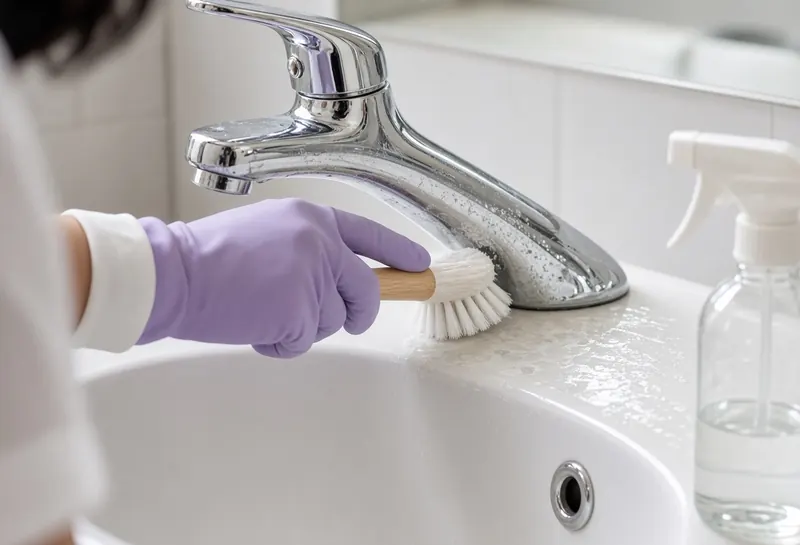
What is limescale, actually?
Limescale is a mineral deposit from hard water that settles and hardens on a surface. Because it is mineral, scale is most effectively dissolved by an acid cleaner. That is why almost every descaler in our catalogue is listed as acid pH.
The catch is that scale in a guest bathroom and scale inside a dishwasher are two different jobs. The products are different too.
A quick map: where is the scale, and what do you use?
| Product | Function | pH | Best for |
|---|---|---|---|
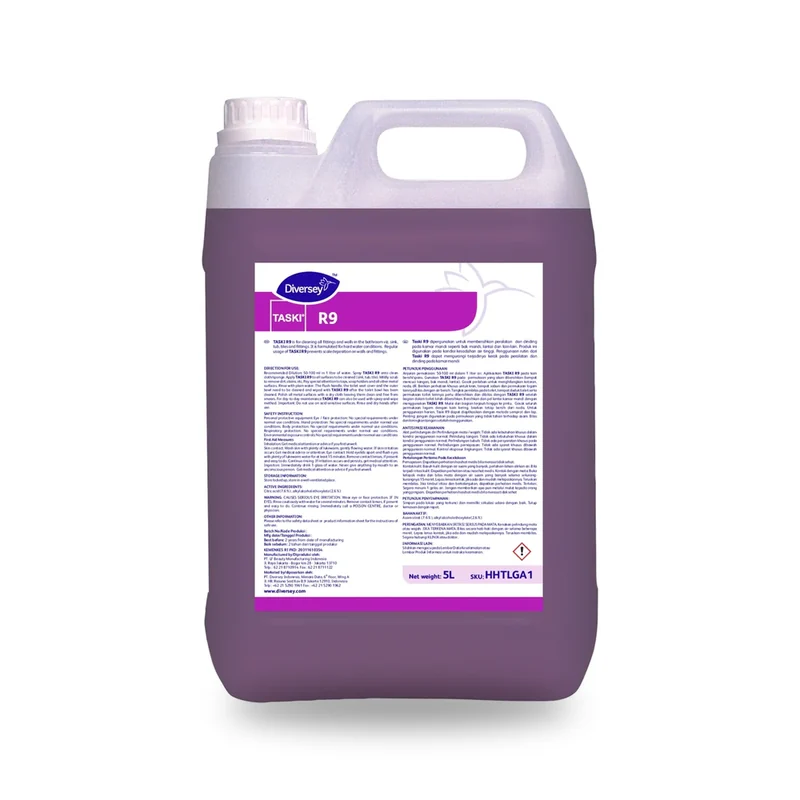
| TASKI R9 | Washroom descaler, especially for hard-water conditions | Acid | Washroom fixtures and walls |
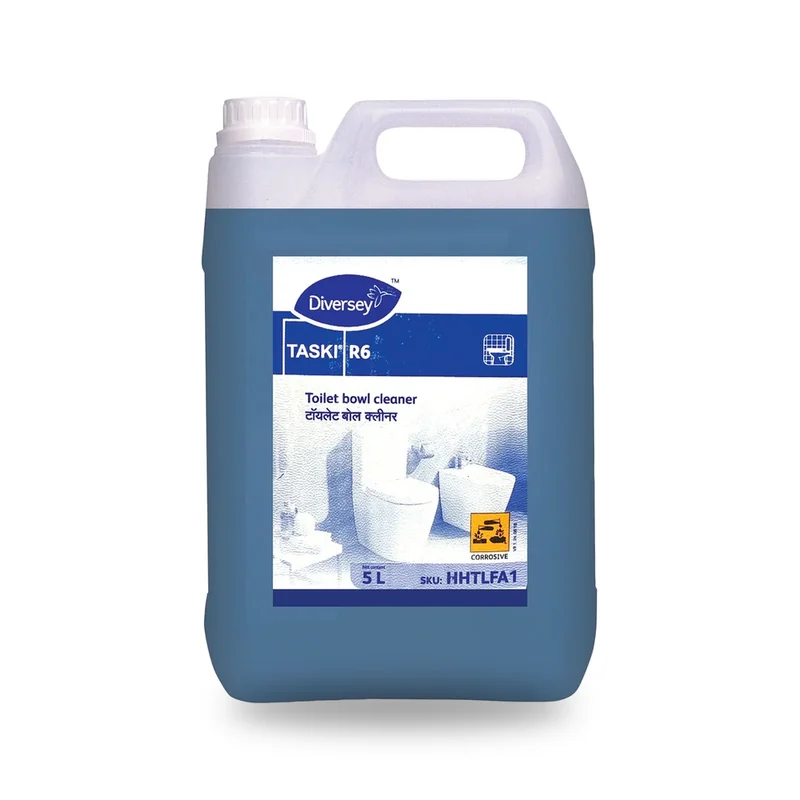
| TASKI R6 | Toilet and urinal cleaner | Acid | Limescale and stains in toilets |
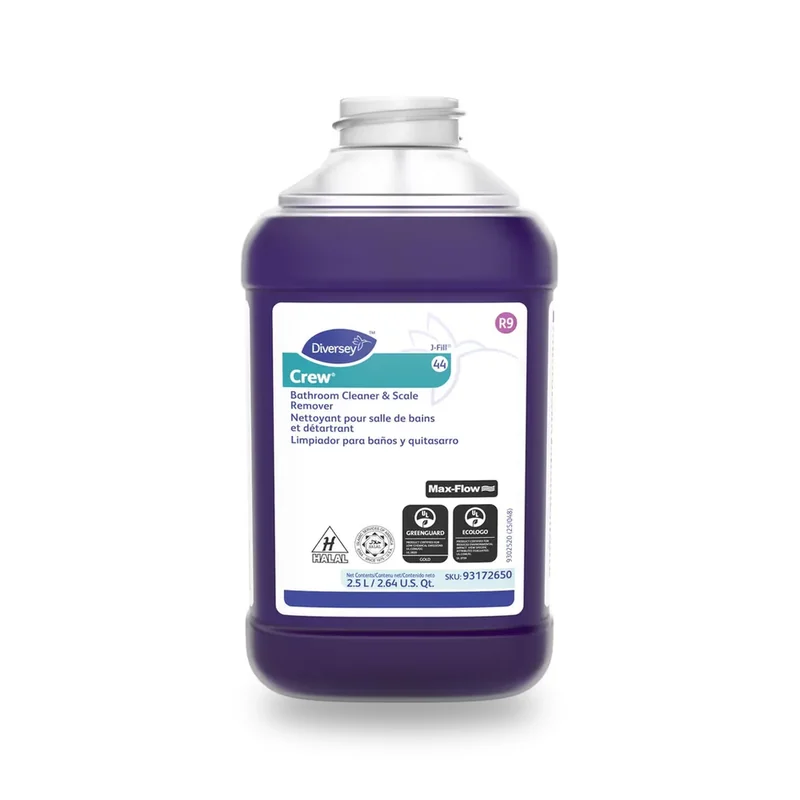
| Crew | Mild acid washroom cleaner | Acid | Light limescale and soap residue |
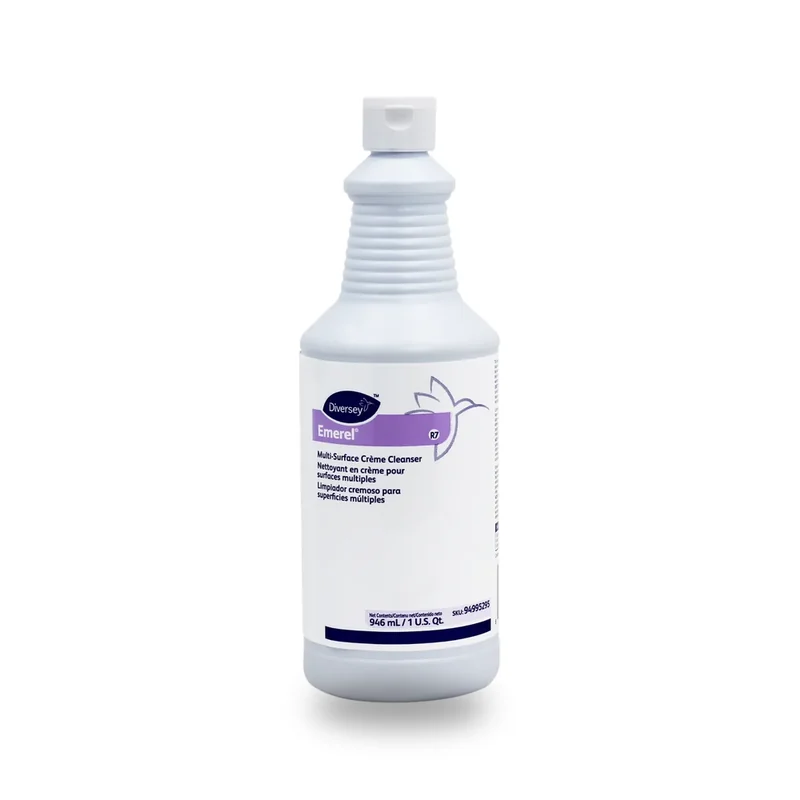
| Emerel Crème Cleanser | Mild abrasive cream | Acid | Stubborn stains on sinks and tiles |
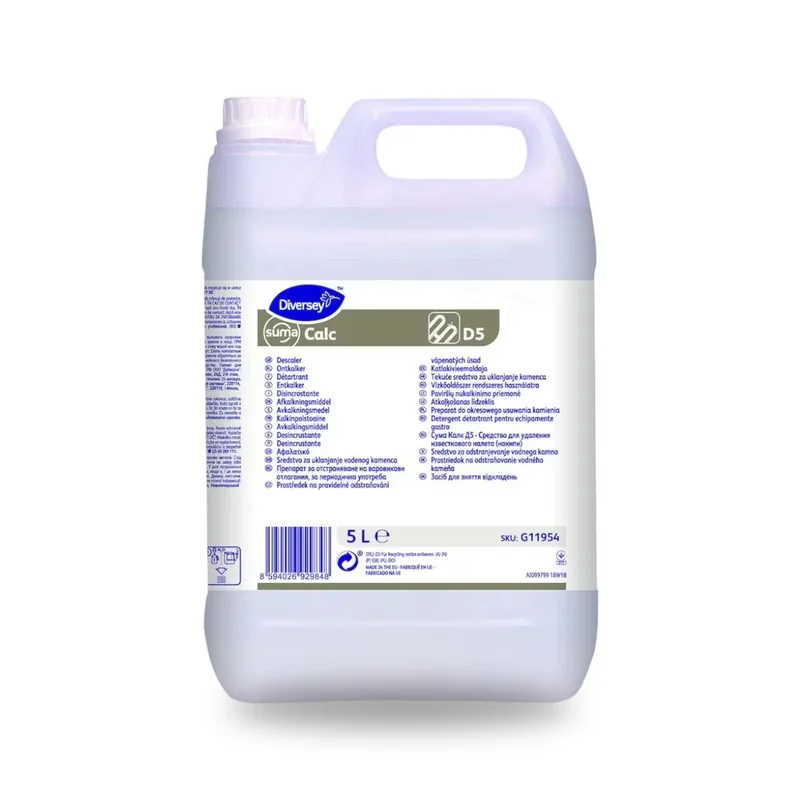
| Suma Cal-X | Descaler | Acid | Dishwashers, bain-maries, water heaters, and tea and coffee urns |
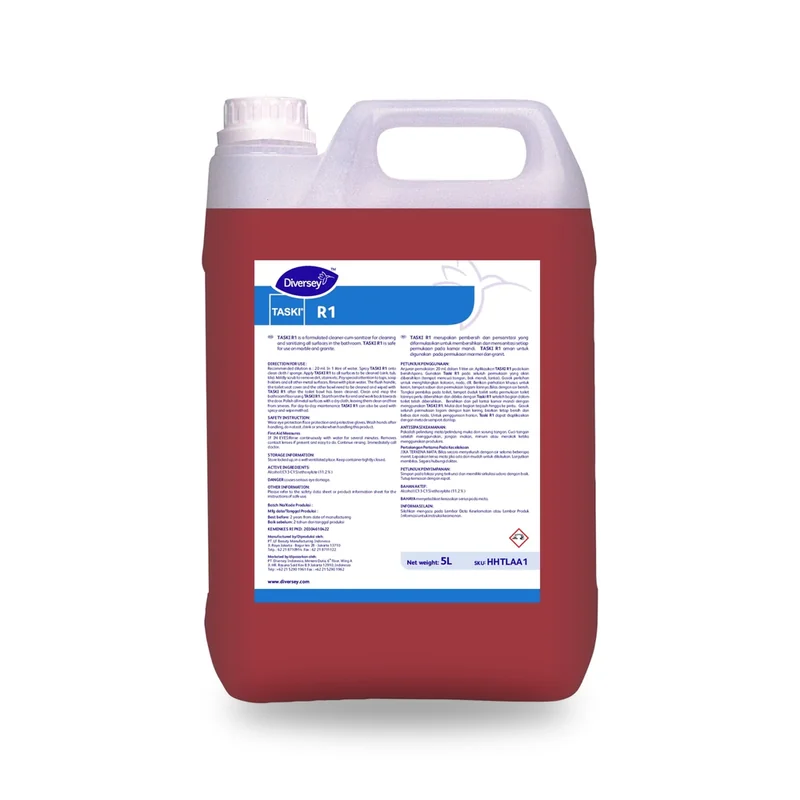
For daily washroom cleaning, TASKI R1 is enough. A descaler is used when deposits start to show, not for mopping every day.
Hotel washrooms: a regular routine is lighter work
In a hotel, scale rarely appears overnight. It builds slowly from water that dries on taps, shower glass and tiles. If it is left for months, it takes a long time to remove.
The pattern is simple: R1 for daily cleaning, R6 for the toilet, R9 when scale starts to show. These codes are part of the TASKI series used by housekeeping teams. See what R1 to R9 stand for.
Kitchen machines: don’t wait for spotted glasses
Scale inside a dishwasher or water heater is not visible from the outside, but you feel the effect: dull wash results and a machine that works harder. For this job, use the descaler Suma Cal-X as the label directs. A full explanation of detergent, rinse aid and descaler is in the warewashing chemicals article.
Three safety rules when using a descaler
- Not on marble or calcareous natural stone. An acid cleaner can dull it. Marble has its own care method: crystallization.
- Do not mix it with a chlorinated product. Here is why.
- Wear gloves, follow the labelled dose, and rinse as directed.
Why does the scale come back so quickly?
Hard water keeps bringing new minerals every day. As soon as the water dries on a surface, the minerals are left behind. That is why scale cannot be “wiped out once and for all”. What you can do is stop it building up: wipe taps and shower glass dry after cleaning, schedule periodic descaling, and note the areas that scale up fastest.
With a simple note like that, the team knows which rooms need more attention, and chemical use becomes more measured.
The bottom line: scale is not an enemy you have to fight with the harshest liquid. Identify the place, choose the matching product, and make it a routine. The result: guest bathrooms stay bright, and kitchen machines stay in good condition.
Quick questions
Which descaler is for a hotel bathroom? TASKI R9 for scale on washroom fixtures and walls in hard-water conditions, TASKI R6 for toilets and urinals.
Is a descaler safe on a marble floor? It is not recommended. Acid products can dull marble; use a marble-specific care method.
How do I remove scale from a dishwasher? Use the descaler Suma Cal-X at the dose and method on the label, then recheck the detergent and rinse-aid dose.