


Disinfectant or Sanitizer? Don’t Mix Them Up — Here’s the Difference for Kitchens, Hotels and Hospitals
“It’s already been sprayed with disinfectant.” You hear this in kitchens and offices alike. But was it a disinfectant, a sanitizer, or just a scented cleaner? The three are different, and choosing the wrong one can leave your cleaning effort short of the mark.
The difference in one sentence
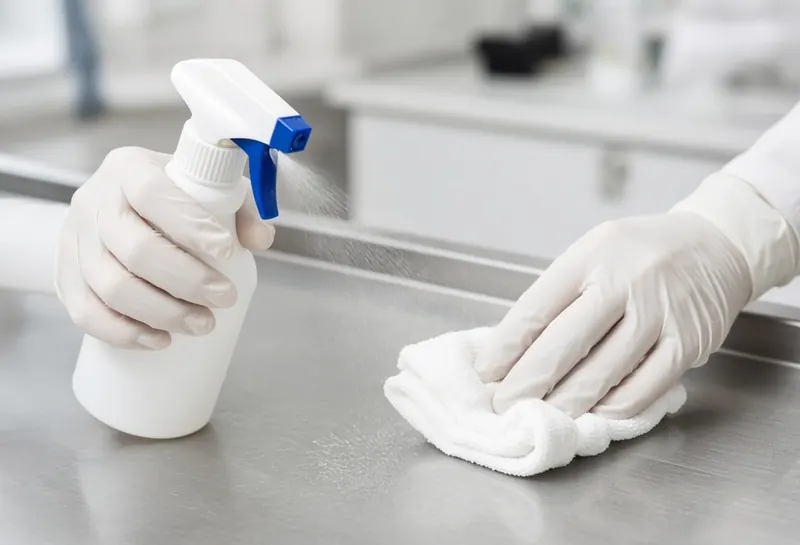
A cleaner removes soil. A sanitizer reduces the number of germs on a surface, and is commonly used in food areas. A disinfectant kills microorganisms according to the claims on its label, and is commonly used in healthcare facilities. All three work best in this order: clean first, then sanitize or disinfect.
Product examples by area
| Product | Function | pH | Best for |
|---|---|---|---|
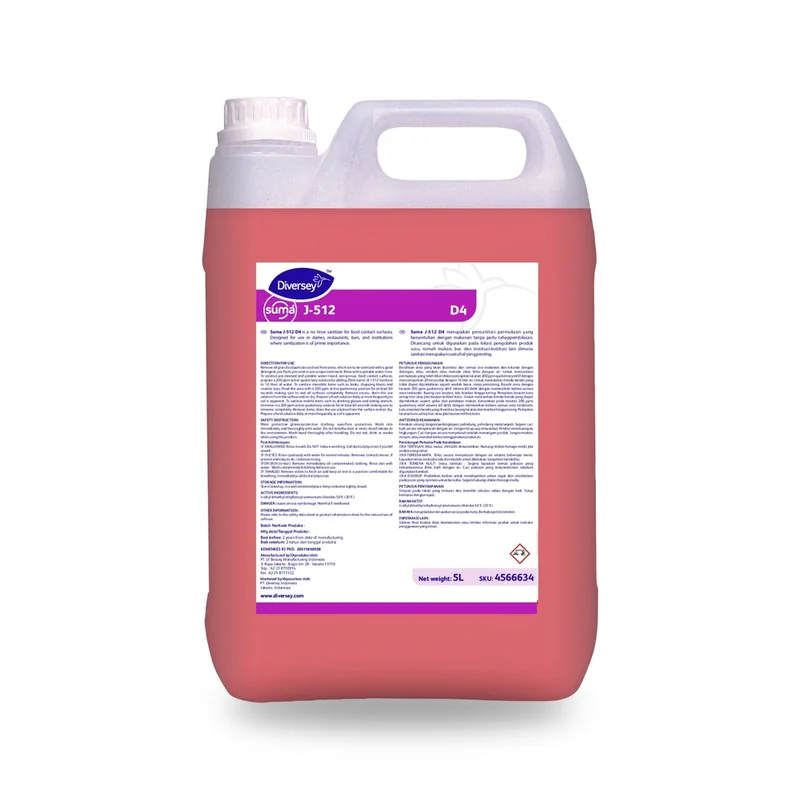
| Suma J512 | No-rinse sanitizer, dilution 1:512 | Neutral | Food-contact surfaces in the kitchen |
| Oxivir Excel | Concentrated AHP disinfectant | Acid | Surfaces in hospitals and clinics |
| Oxivir Excel Foam | Ready-to-use AHP disinfectant, 30-second contact time | Acid | High-touch points |
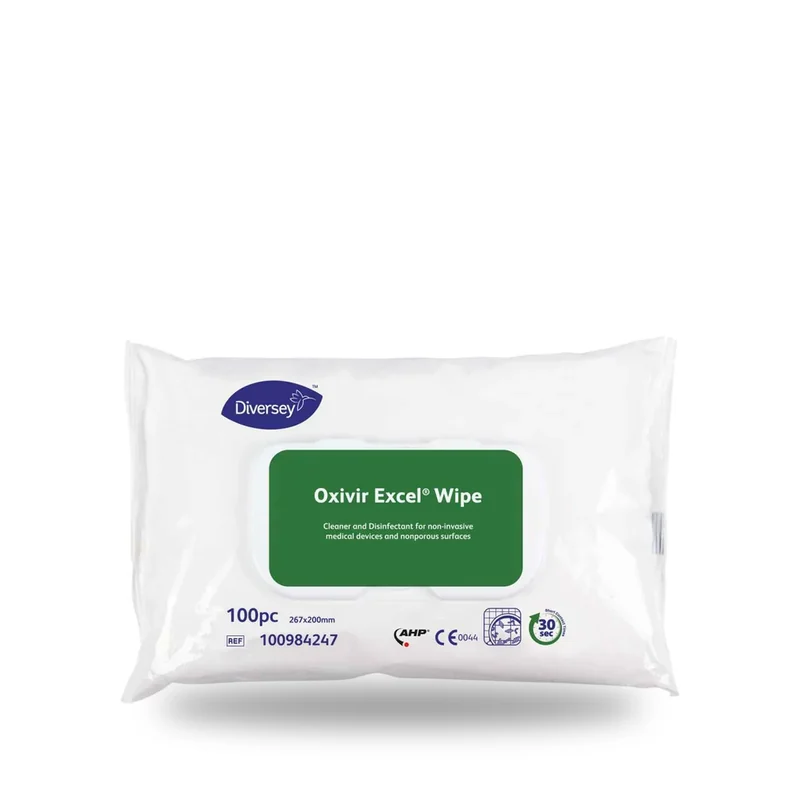
| Oxivir Excel Wipes | AHP disinfectant wipes, 30 seconds | Acid | Non-invasive medical devices and hard surfaces |
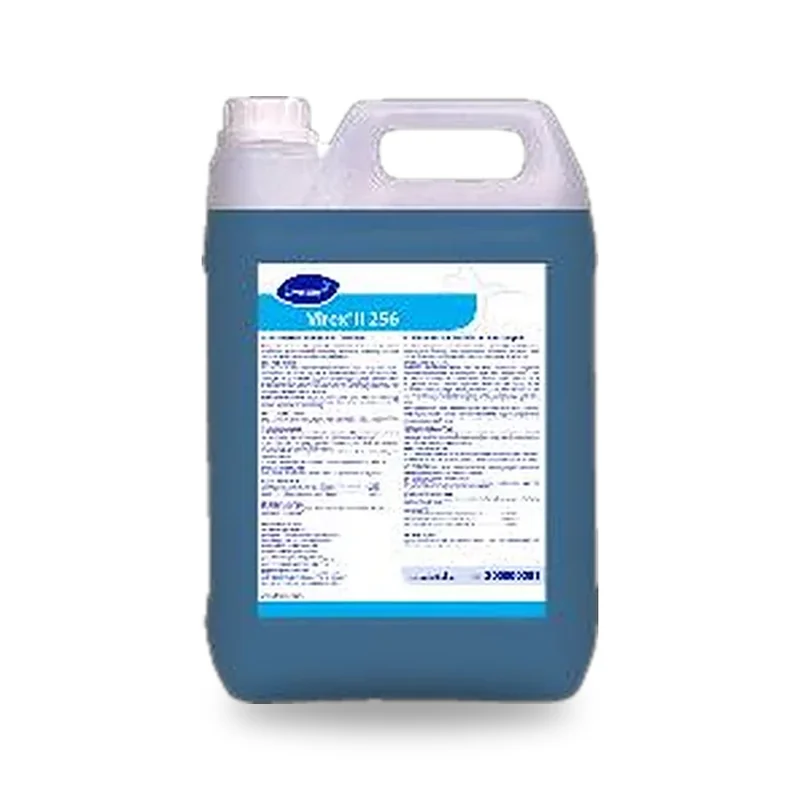
| Virex II 256 | Quat disinfectant, dilution 1:256 | Alkaline | Hospitals; the label lists kill claims for MRSA and Norovirus |
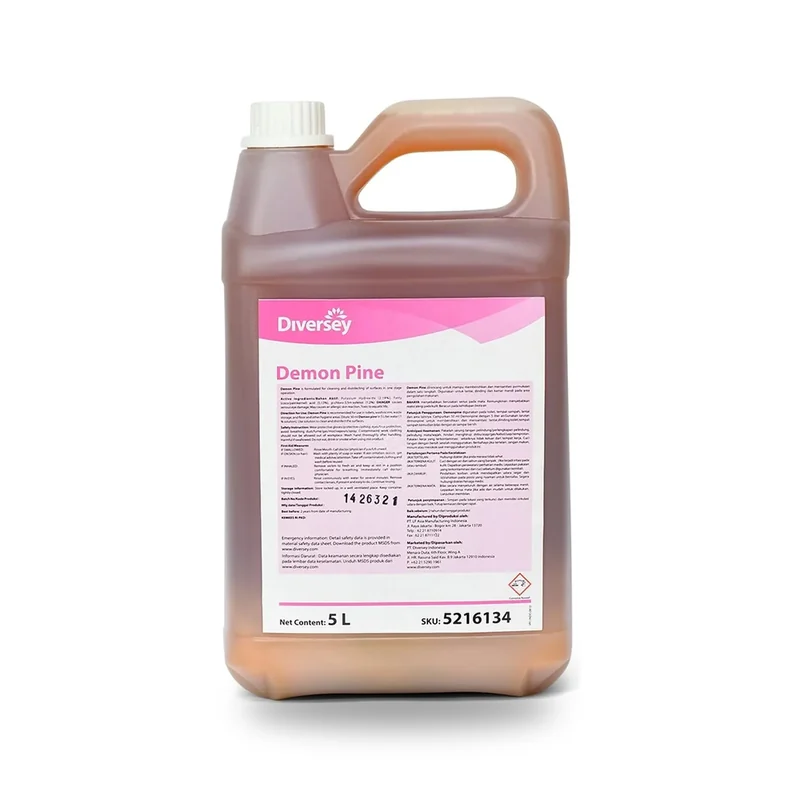
For hotels and buildings, Demon Pine is a pine-scented cleaner and disinfectant in one step, while TASKI R2 cleans and sanitizes hard surfaces in the guest room.
Contact time: the step that is often skipped
A disinfectant needs time to work. If you wipe it dry straight away, the result can fall well short of the label claim. Follow the contact time stated on each product’s label. Oxivir Excel Foam and Wipes, for example, list 30 seconds. For hospitals, read how to choose a hospital disinfectant.
In the kitchen: sanitize after cleaning
A surface that is still greasy must be cleaned first. After that, a sanitizer such as Suma J512 is used on the surface, including food-contact surfaces, with no rinse required. The full sequence is in the restaurant kitchen cleaner list.
One important rule
Do not mix disinfectants, sanitizers and cleaners to “make them stronger”. Certain mixtures, especially chlorine with an acid product, are hazardous. Read the explanation.
A quick way to choose
Ask two questions. First, what is the area? A food-contact surface, a guest room, a public toilet, or a patient-care room. Second, which format is most practical for the team? A diluted concentrate, a ready-to-use foam, or a wipe. The best product is the one that is actually used correctly every day, not the one that looks strongest on paper.
Once you have chosen, write the procedure on a single sheet: the work sequence, the dose, the contact time and the protective equipment to use. Post it in the work area so every shift follows the same method.
And do not forget hand hygiene. A surface that has already been disinfected can be recontaminated by unclean hands. Provide hand soap and hand sanitizer at points staff can easily reach.
The bottom line: choose by area and purpose — a sanitizer for food areas, a disinfectant for healthcare facilities and higher-risk touch points — and always start from a clean surface.
Quick questions
What is the difference between a disinfectant and a sanitizer? A sanitizer reduces the number of germs and is common in food areas; a disinfectant kills microorganisms according to its label claims and is common in healthcare facilities.
Which sanitizer is for food-contact surfaces? Suma J512, a no-rinse sanitizer with a listed dilution of 1:512.
How long is the disinfectant contact time? Follow each product’s label; Oxivir Excel Foam and Wipes list 30 seconds.