


One Kitchen, Many Soils: A Restaurant Kitchen Cleaner List by Task
Have you ever seen one “all-purpose cleaner” used on a frying pan, the floor and the fridge door? Convenient, but the result is rarely at its best. A restaurant kitchen has many different “enemies”, and professional kitchen cleaners are made for each task.
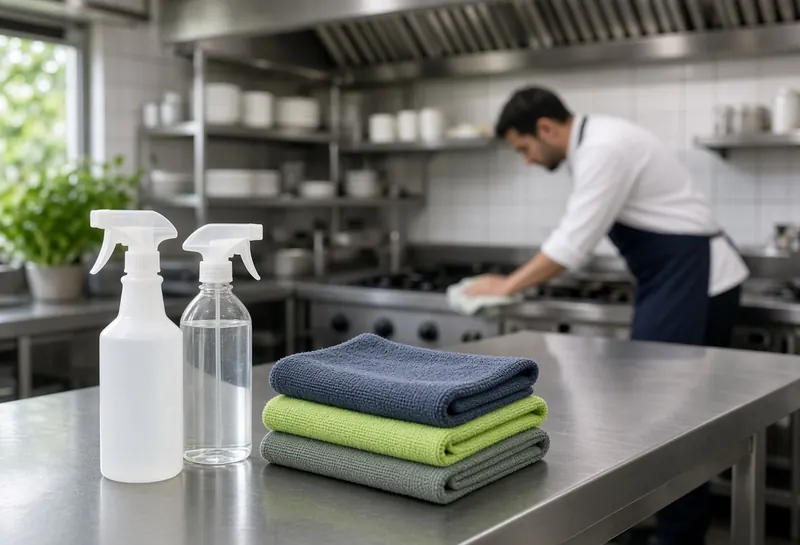
Why isn’t one product enough?
Grease, carbon deposits, limescale and germs all behave differently. Grease and carbon are most readily lifted by an alkaline cleaner; limescale is dissolved by an acid cleaner; stainless steel needs a neutral polish; and food-contact surfaces need a sanitizer after they have been cleaned. One liquid cannot excel at all of them.
A list by task
| Product | Function | pH | Best for |
|---|---|---|---|
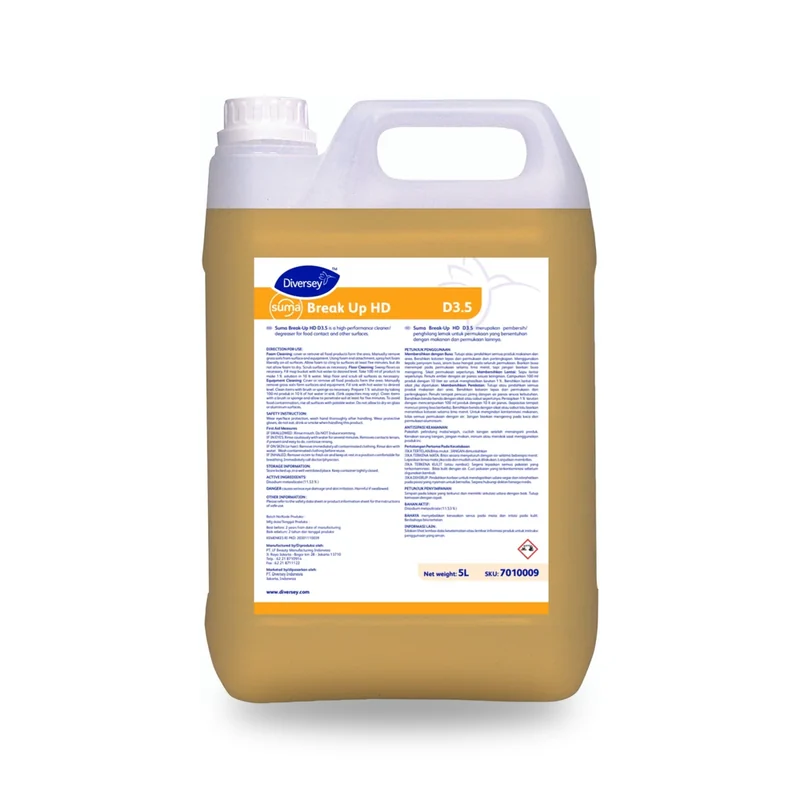
| Suma Break Up D3.5 | Degreaser / grease remover | Alkaline | Oil, grease and animal protein on hard surfaces |
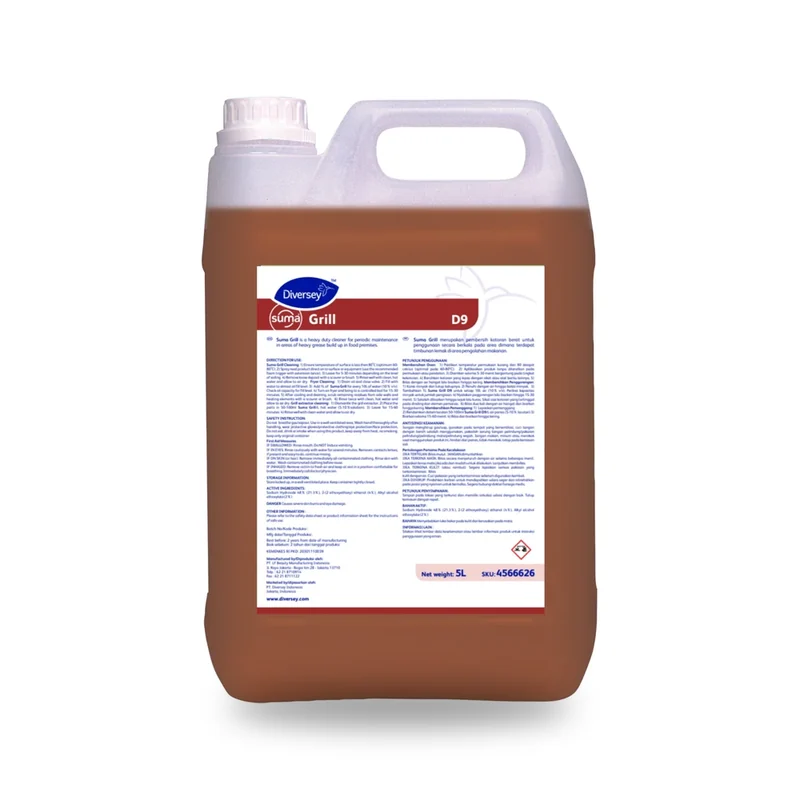
| Suma Grill D9 | Oven and grill cleaner | Alkaline | Carbon deposits on ovens and grills |
| Suma Bio-Floor | Biological kitchen floor cleaner | Alkaline | Kitchen floors, no rinse |
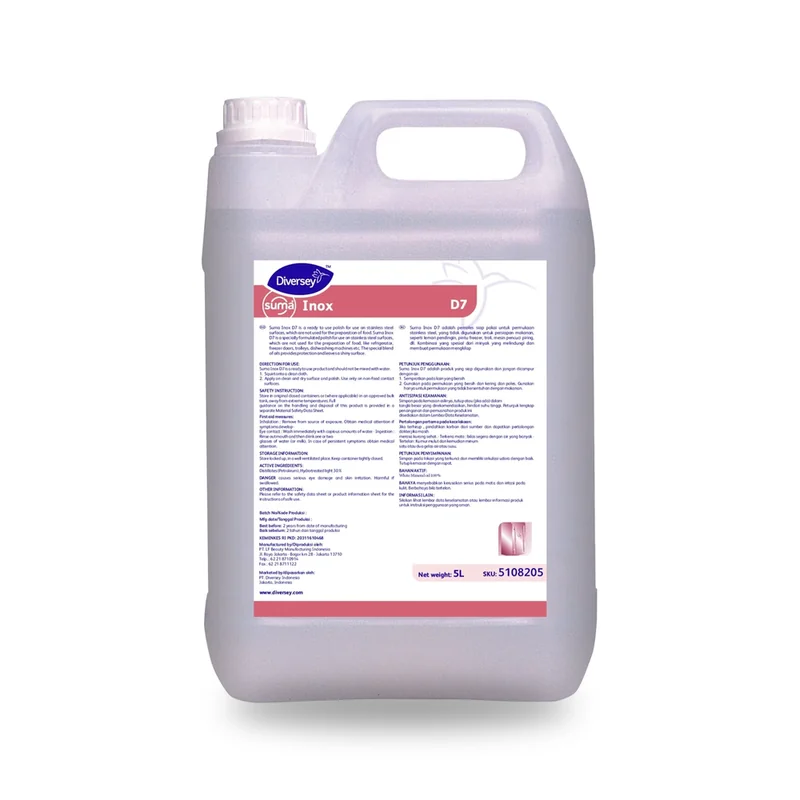
| Suma Inox D7 | Stainless steel polish | Neutral | Worktops, hoods and stainless fridge doors |
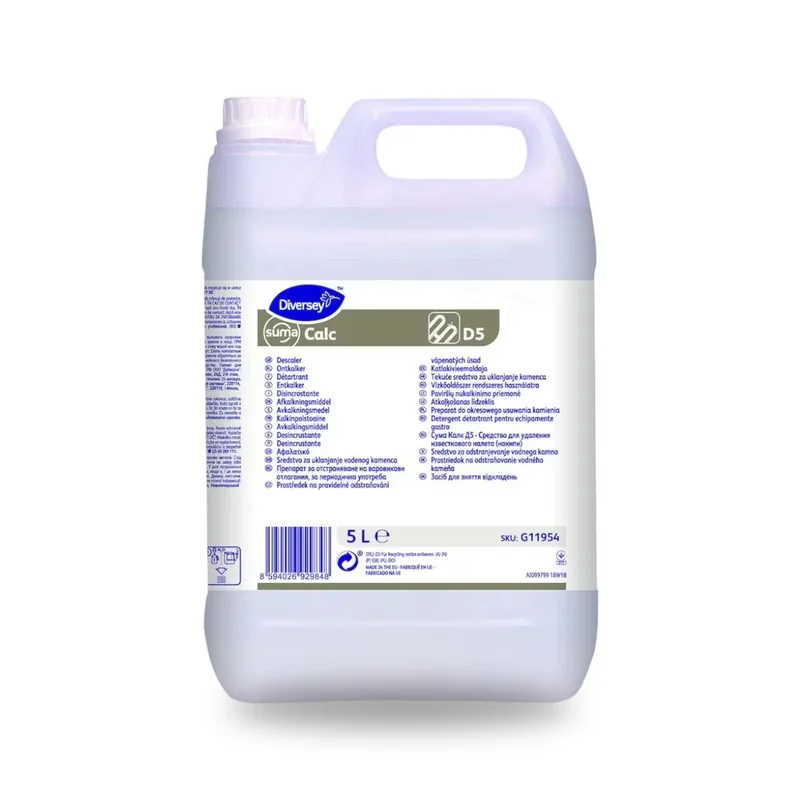
| Suma Cal-X | Descaler | Acid | Dishwashers, bain-maries and water heaters |
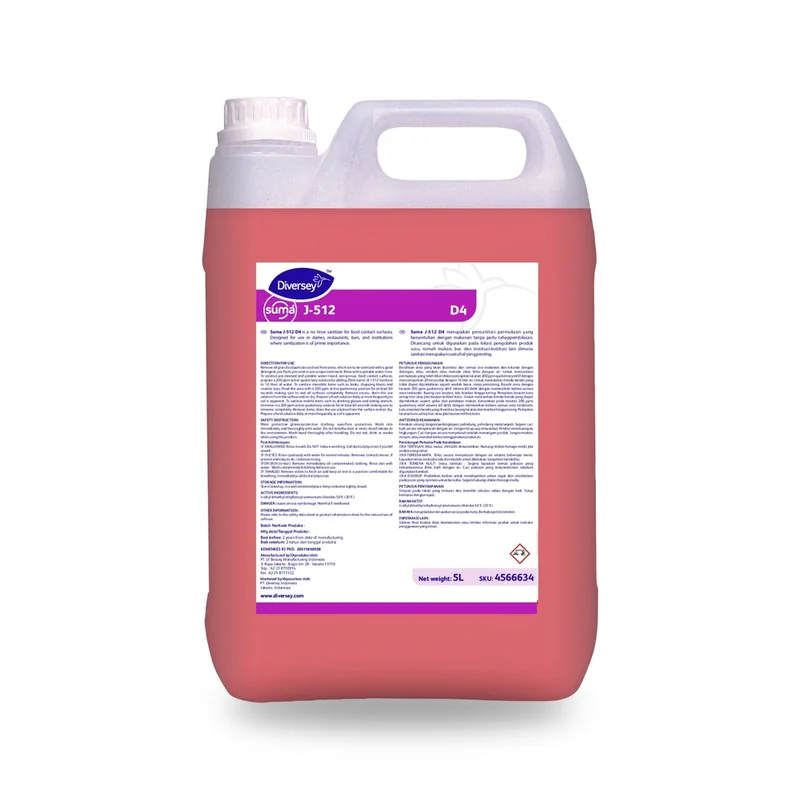
| Suma J512 | No-rinse surface sanitizer | Neutral | Food-contact surfaces |
Need something for a food-prep area as well? There is Diversol CX, a cleaner and sanitizer with a chlorine active. Remember: never mix a chlorinated product with an acid product.
The right order: clean first, then sanitize
This is the most common mistake: spraying a sanitizer onto a surface that is still greasy. A sanitizer works best on a surface that is already clean. So the sequence is: lift the grease with a degreaser, rinse, then sanitize with Suma J512, whose listed dilution is 1:512.
Share the work across the shift
Not every job has to be done every hour. Worktops and food-contact surfaces are cleaned after each use; floors at the end of the shift; ovens and hoods on a regular cycle. An example breakdown is in the restaurant kitchen cleaning schedule.
For an oven that is already black with deposits, read how to choose an oven cleaner. And if your main problem is grease on floors and walls, there is a grease-remover guide by area.
Money-saving tips that are often forgotten
- Concentrates must be measured. More is not cleaner. Here is how to calculate it.
- Label every spray bottle that holds a ready-to-use solution.
- Wear gloves and follow the label, especially with an oven cleaner.
Where should you start?
If your kitchen does not yet have a system, do not buy everything at once. Start with the three problems that appear most often, usually grease on surfaces, a slippery floor, and worktop hygiene. Choose products for those three tasks, train staff to use them at the correct dose, then add other products as needed.
A step-by-step approach like this helps staff get used to the routine faster, makes stock easier to control, and shows results from the first week.
The bottom line: a clean kitchen is not about the strongest liquid, but the right liquid for each task, used at the correct dose and on a consistent routine.
Quick questions
Which kitchen cleaner is for fat and oil? Suma Break Up D3.5, a concentrated degreaser for soil, oil and animal protein on hard surfaces.
What is the difference between a cleaner and a sanitizer? A cleaner lifts soil; a sanitizer reduces germs after the surface is clean. Use them in that order.
How are Suma products packed? Most factory packs are 2x5L; Suma Bio-Floor is 4 x 3.78 L. Ask for a price on WhatsApp.