


Kitchen Oven Black with Deposits? Here’s How to Choose an Oven Cleaner That Gets It Shining Again
Ever opened the oven at the end of a shift and seen nothing but a sticky black layer? Relax — almost every restaurant kitchen has been there. The good news is that the deposit can come off without hours of scrubbing, as long as you use the right oven cleaner and the right method.
From grease splashes to a hard carbon deposit
Every time you roast or bake, oil and sauce splash onto the walls, racks and trays. Those splashes dry, then get “baked on” again the next time the oven is used.
Over time you get a carbon deposit: black, hard and stubborn. The effect is not just about appearance. The oven starts to smoke, the smell can transfer to food, and the fire risk rises too.
Is an oven cleaner acid or alkaline?
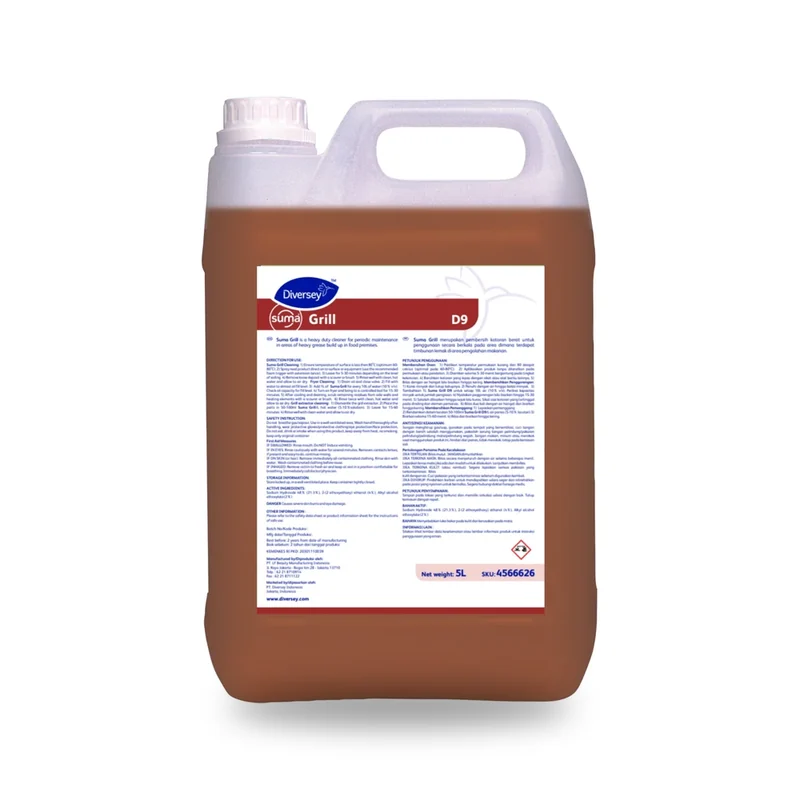
The answer: alkaline (alkali). An alkaline solution helps break down grease and soften carbon so it is easier to scrub and rinse. That is why Suma Grill D9, the oven and grill cleaner in our catalogue, is listed as alkali/alkaline pH.
Acid products have a different job, for example removing limescale in a dishwasher or bain-marie with Suma Cal-X. One golden rule: never mix an oven cleaner with an acid or chlorinated product. Why is that hazardous? Read the danger of mixing cleaning chemicals.
“Just use dishwashing liquid, right?”
This is the most common temptation. Dishwashing liquid is designed for plates and utensils, not for carbon that has been baked on again and again. The result: staff scrub for longer, energy is wasted, and the deposit merely moves somewhere else.
A dedicated oven cleaner works differently: the deposit is softened first, then removed. The job takes far less time, and the oven surface does not need to be scraped until it is scratched.
Gas, electric or deck ovens: a few differences
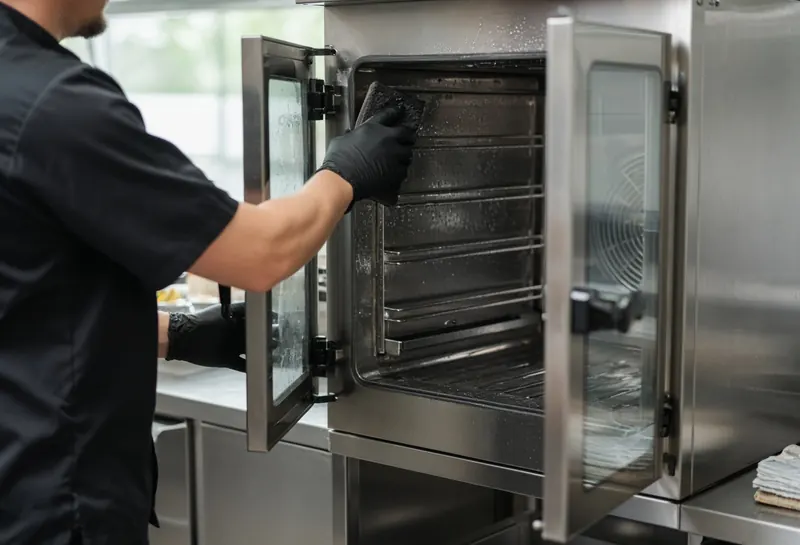
Gas and electric ovens: remove racks and trays, and protect elements, fans and sensors from a direct spray. A deck oven for pizza or bread: scrape and brush the stone floor while it is cold; do not soak it in liquid. A combi oven: follow the cleaning programme from the oven manufacturer.
Five steps to a clean oven without the drama
- Switch the oven off and wait until the temperature matches the label instructions.
- Wear gloves and eye protection. A strong alkali is not for bare skin.
- Remove racks and trays, and scrape leftover food with a plastic scraper.
- Spray evenly and allow the labelled contact time. Avoid heating elements, fans and electrical parts.
- Agitate, rinse thoroughly, then dry. No chemical residue should remain before the oven is used again.
Mistakes that quietly damage an oven
- Spraying elements that are still hot.
- Forgetting to rinse, so the oven smells when it is heated.
- Using a metal scourer on enamel or the door glass.
- Waiting until the deposit is thick before cleaning. Regular cleaning is less work; an example is in the restaurant kitchen cleaning schedule.
A complete team for the oven area
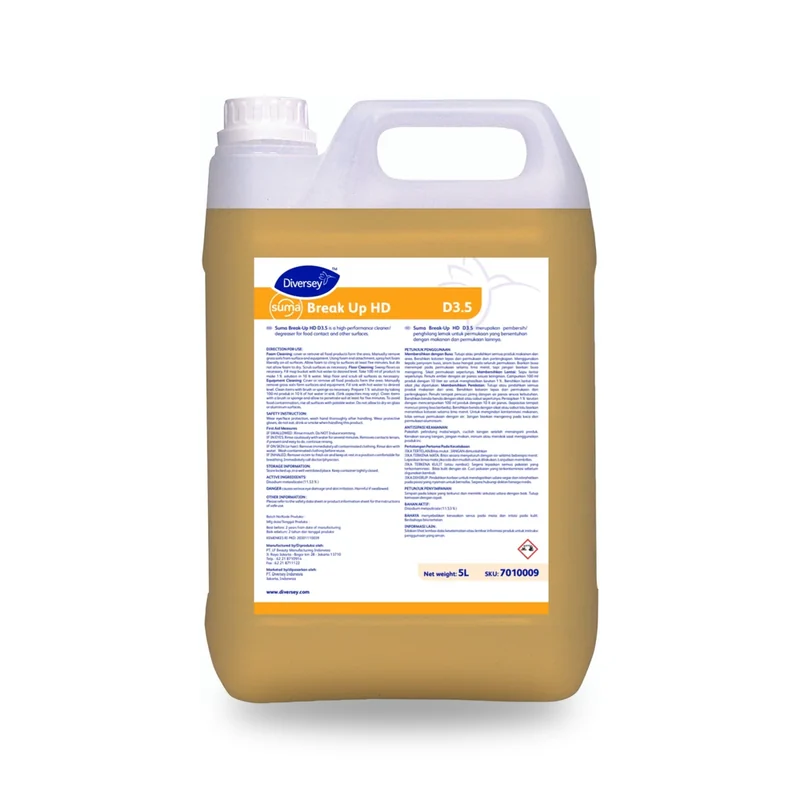
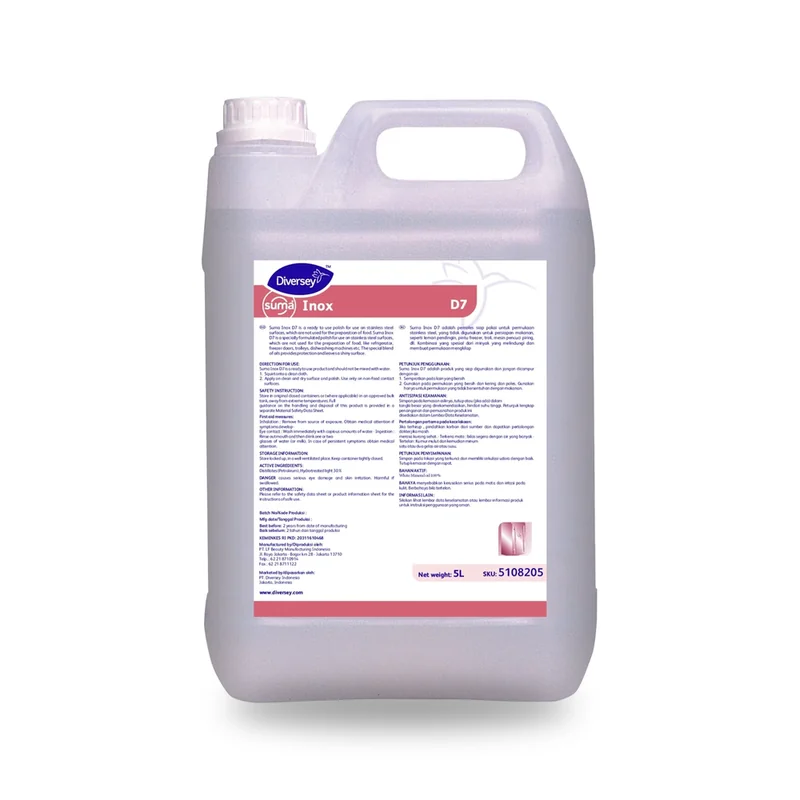
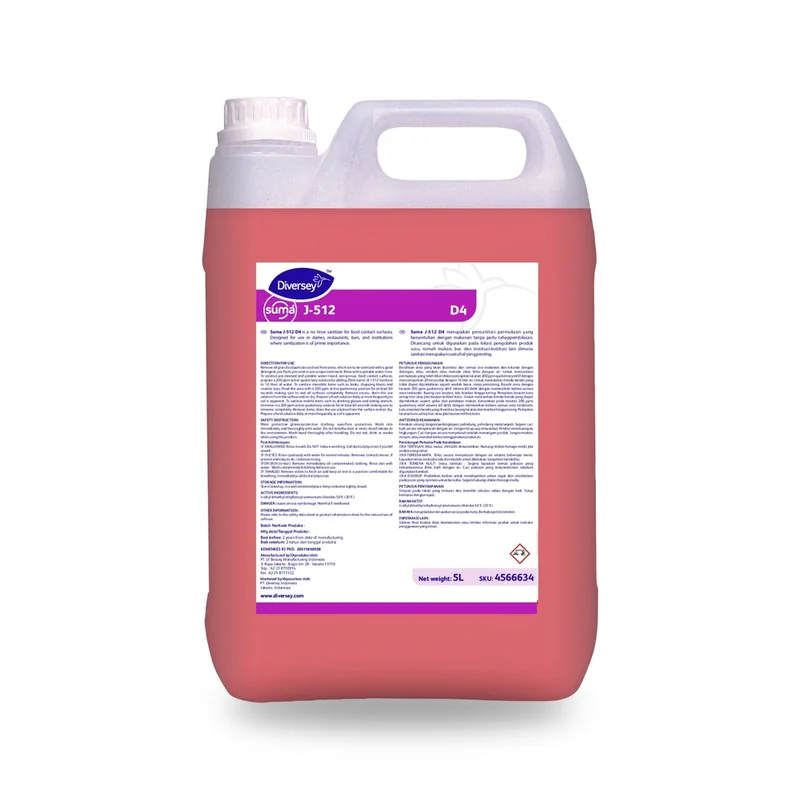
Suma Grill D9 for carbon on ovens and grills. Suma Break Up D3.5 for grease on the hood, walls and tables around the oven. Suma Inox D7 to polish the stainless body. Finally, Suma J512 to sanitize nearby food-contact surfaces.
Want a picture of the whole kitchen, not just the oven? Continue to the guide on kitchen cleaners and grease removers.
Quick questions
How often should a restaurant oven be cleaned? A light wipe at the end of every shift, and a thorough clean at least once a week. A very busy kitchen may need to do it more often.
Can it be used on a grill as well? Yes. Suma Grill D9 is designed for ovens and grills. For pots and pans, use a manual dishwash such as Suma Star D1.
Where can I buy the original product? Sanitra is an Authorized Distributor of Diversey in Jakarta. Chat with us for a price, or request an oven-cleaning demo in your kitchen through the contact page.