


“Get the R2, Use the R6!” Understanding Hotel Housekeeping Chemicals TASKI R1 to R9
In many hotels in Indonesia, housekeeping staff do not use the product name, but the code: “get the R2”, “use R6 on the toilet”. These codes come from Diversey’s TASKI Room Care series. This is a short guide to the hotel housekeeping chemicals people look up most often: what do the codes R1 to R9 mean?
Why use a code system?
One code for one job. As a result, new staff learn faster, spray bottles are easy to label, and the risk of using an acid product on the wrong surface goes down. Remember, though: the code helps, but the pack label is the official reference.
What each code means in the Sanitra catalogue
| Code | Function | Area |
|---|---|---|
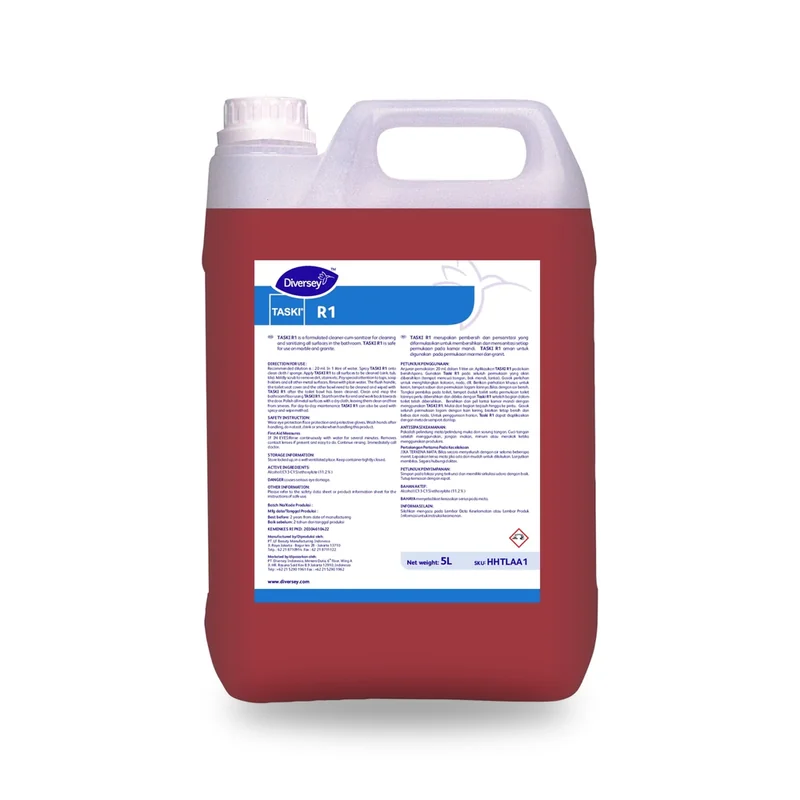
| TASKI R1 | Washroom cleaner and sanitizer | Sinks, bathtubs, tiles, floors |
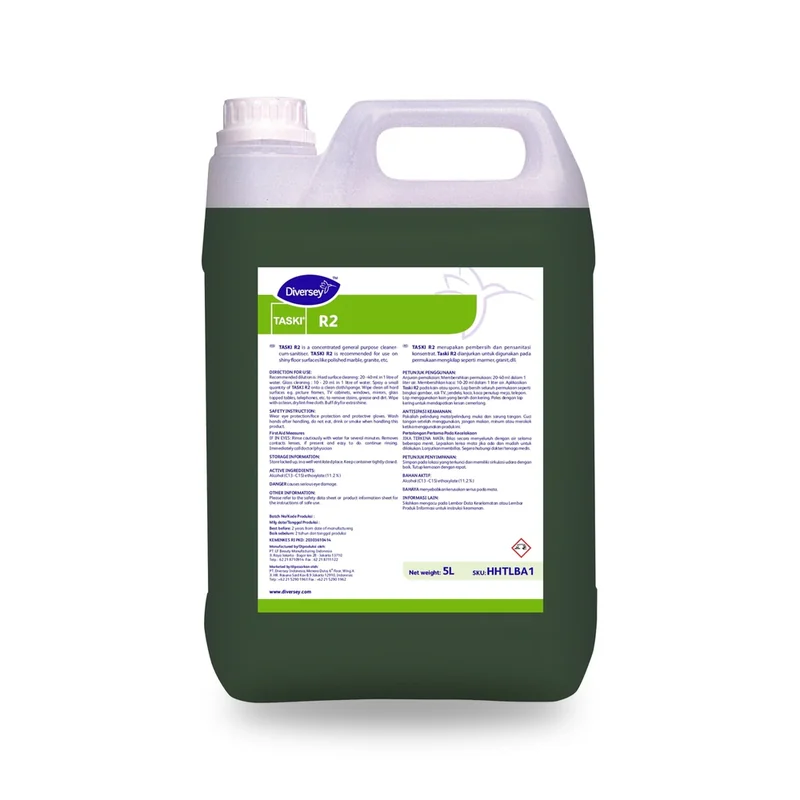
| TASKI R2 | Multi-purpose cleaner and sanitizer | Cabinets, picture frames, telephones |
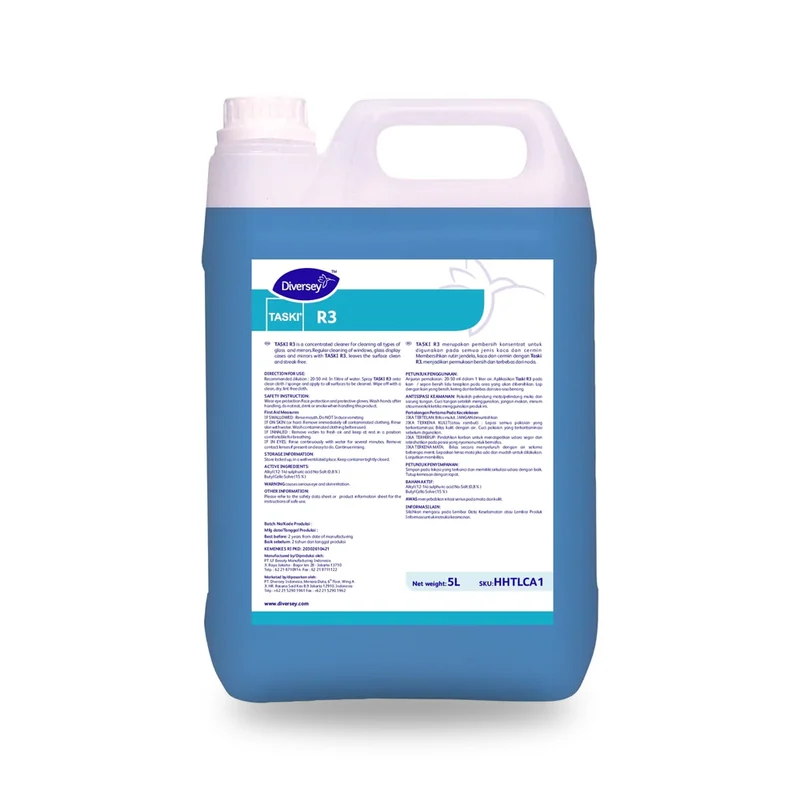
| TASKI R3 | Glass and multi-surface cleaner | Windows, mirrors, tiles |
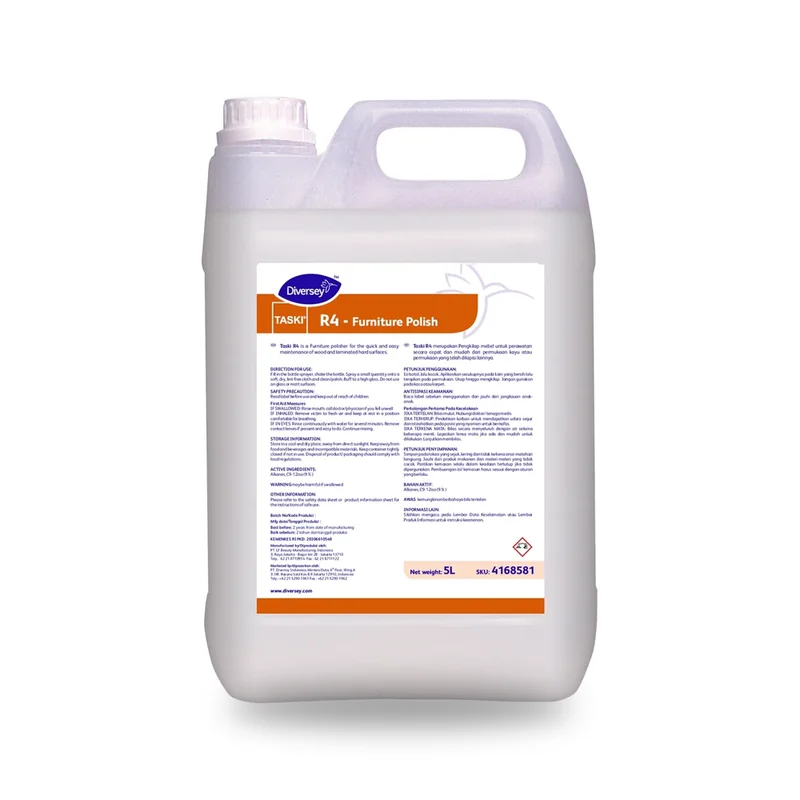
| TASKI R4 | Wood furniture polish | Wooden furniture |
| TASKI R5 Plus | Concentrated air freshener | Rooms, corridors, toilets |
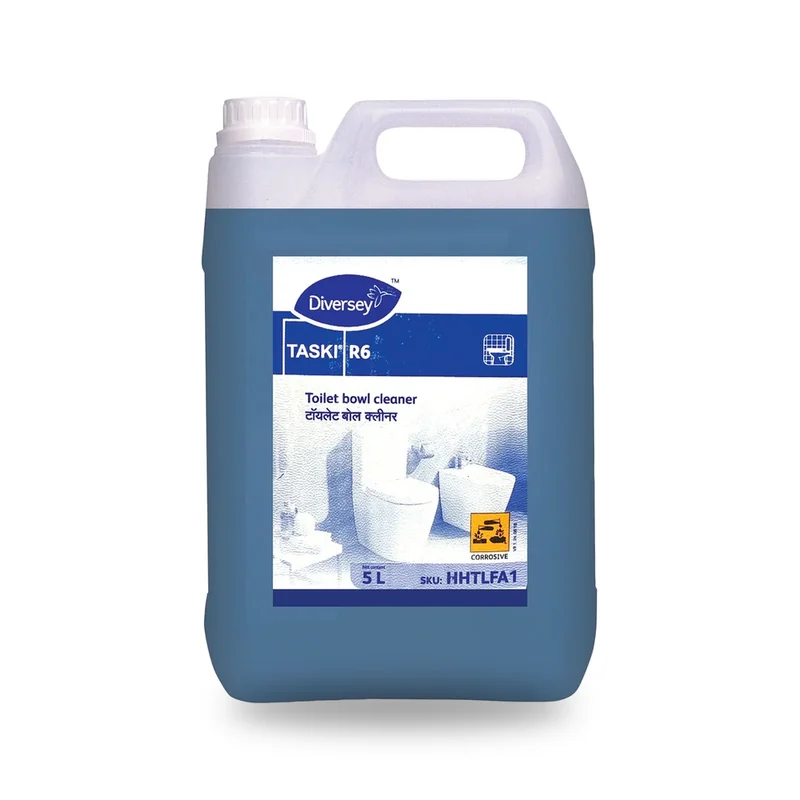
| TASKI R6 | Toilet cleaner (acid) | Toilets and urinals |
| TASKI R9 | Hard-water washroom cleaner (acid) | Washroom fixtures and walls |
Other codes in the series, for example R7 and R8, are not in the Sanitra catalogue at present. Just ask if you need them.
So, what is TASKI R2 for?
This is the question that comes up most often. TASKI R2 is a cleaner and sanitizer for hard surfaces. Our catalogue lists a dose of 20–40 ml per litre of water, depending on the soil level. Unsure how to calculate it? Read how to calculate dilution.
Be careful with R6 and R9
Both are acidic. Do not use them on marble, calcareous natural stone, or a surface that is not acid-resistant. For a marble lobby, there is a method of its own: marble floor crystallization.
Acid products must also not be mixed with a chlorinated product. The explanation is in the danger of mixing cleaning chemicals.
Four habits of a tidy housekeeping team
- One product, one dose and one cloth colour for each area.
- Use a measuring tool or a dispenser, not a pour “by eye”.
- Label every spray bottle that holds a ready-to-use solution.
- Train new staff before they handle the chemical trolley, and record the training.
Need a wider picture, including floors, the kitchen and the hotel restaurant? Read chemical cleaning solutions for hotels and restaurants.
A day with the housekeeping trolley
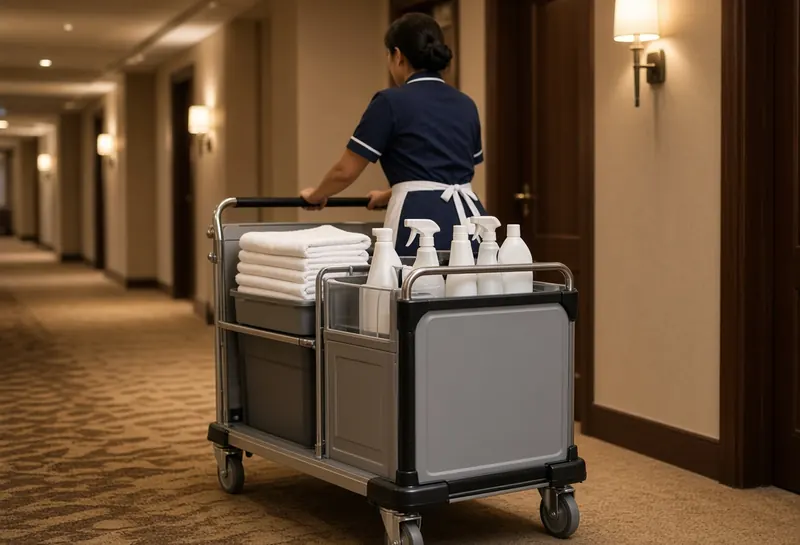
In the morning, the trolley is prepared: an R1 bottle for the bathroom, R2 for room surfaces, R3 for glass and mirrors, R6 for the toilet. Every bottle is already labelled and diluted at the right dose. Staff simply follow the work sequence in each room.
With a system like this, room quality does not depend on who is on duty that day. Guests get the same standard, and a supervisor can check the work more easily.
The bottom line: the R1 to R9 codes are a shared language for the housekeeping team. Once everyone understands what they mean, the work is faster, safer, and more consistent from room to room. Start by posting the table above in your housekeeping room.
Quick questions
What is the difference between R1 and R2? R1 is for washroom surfaces; R2 is a multi-purpose cleaner for hard surfaces in the guest room.
Can R6 be used on a marble floor? No. R6 is acidic and is not suitable for marble or calcareous stone.
Can we request a complete package for a hotel? Yes. See our Hotel & Resort solutions or request a free demo from the Sanitra team.