


The Dish Pile Never Ends? Choose the Right Industrial Dishwashing Liquid: Manual or Machine
Lunch service is over and the wash area is full: plates, glasses, pots and pans. At this point, household dishwashing liquid runs out quickly and the results are inconsistent. It is time to get to know industrial dishwashing liquid, and to choose the path that fits your kitchen.

Path 1: manual washing
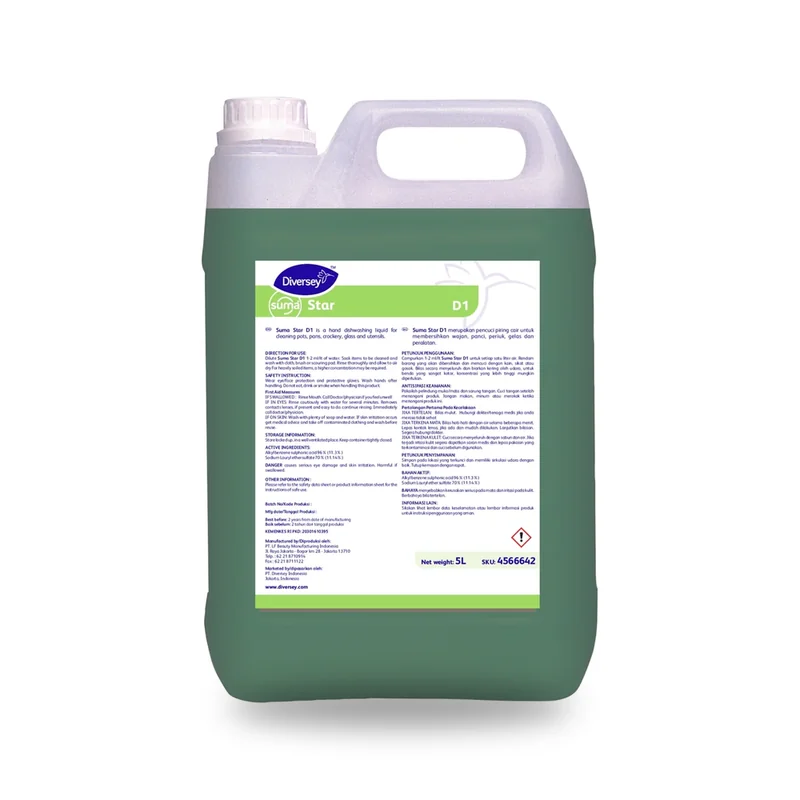
For a kitchen that washes in a sink, the choice is the concentrated manual dishwash Suma Star D1: a manual wash for pots, pans, crockery, glasses and cutlery. Because it is a concentrate, the dose follows the label, not “enough to look soapy”.
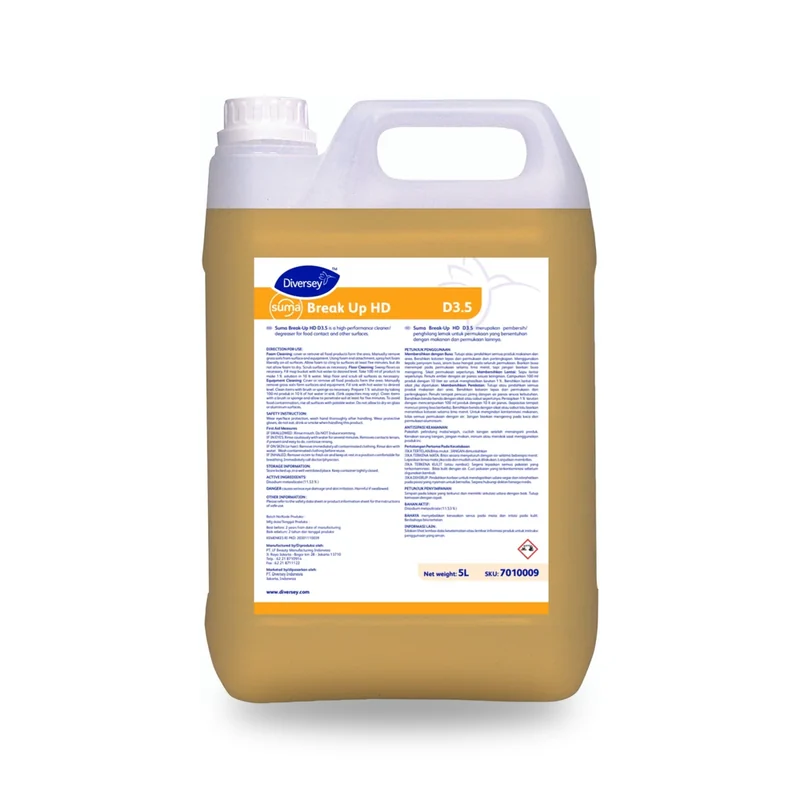
Pots and pans with heavy grease? Suma Break Up D3.5 helps lift oil and fat from hard surfaces.
Path 2: the dishwashing machine
A machine needs dedicated chemicals, usually dosed through a dispenser. The basic pair is a detergent and a rinse aid:
| Product | Function | pH | Best for |
|---|---|---|---|
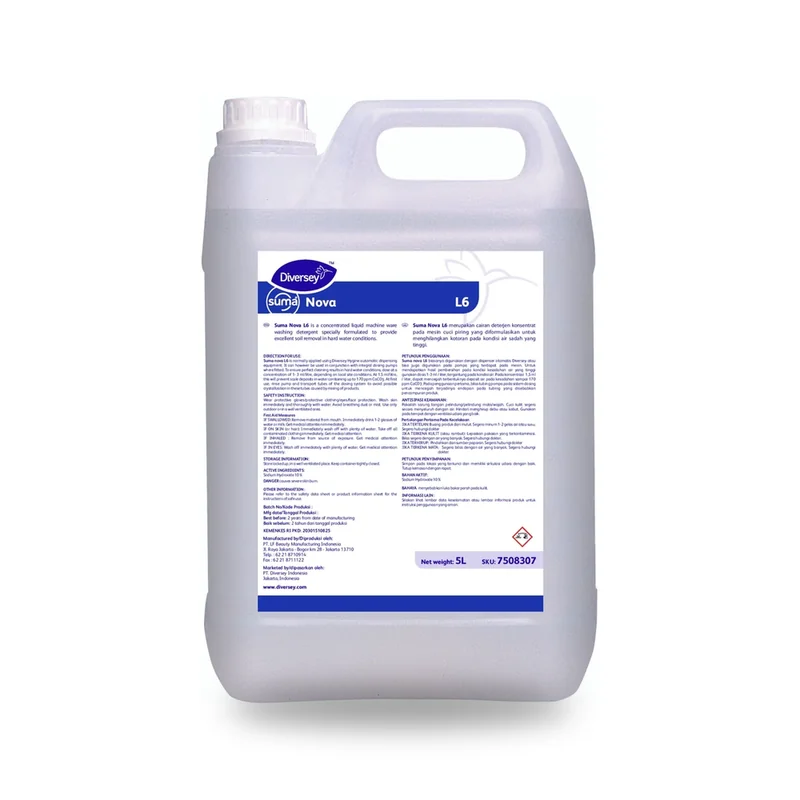
| Suma Nova L6 | Liquid machine warewash detergent | Alkaline | Removing soils, including in high-hardness water |
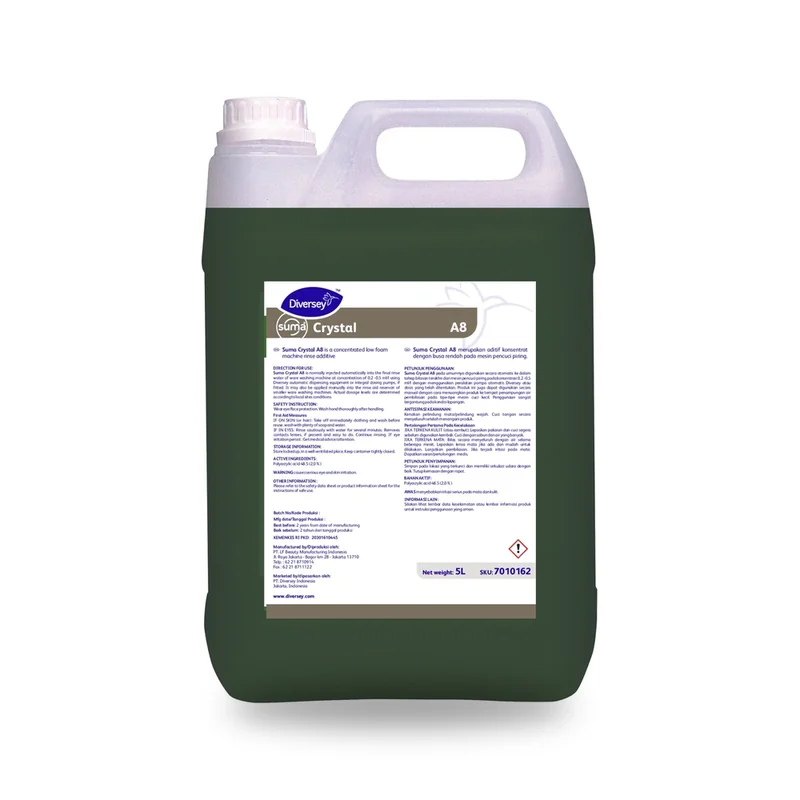
| Suma Crystal A8 | Rinse aid | Acid | Fast, streak-free drying, low foam |
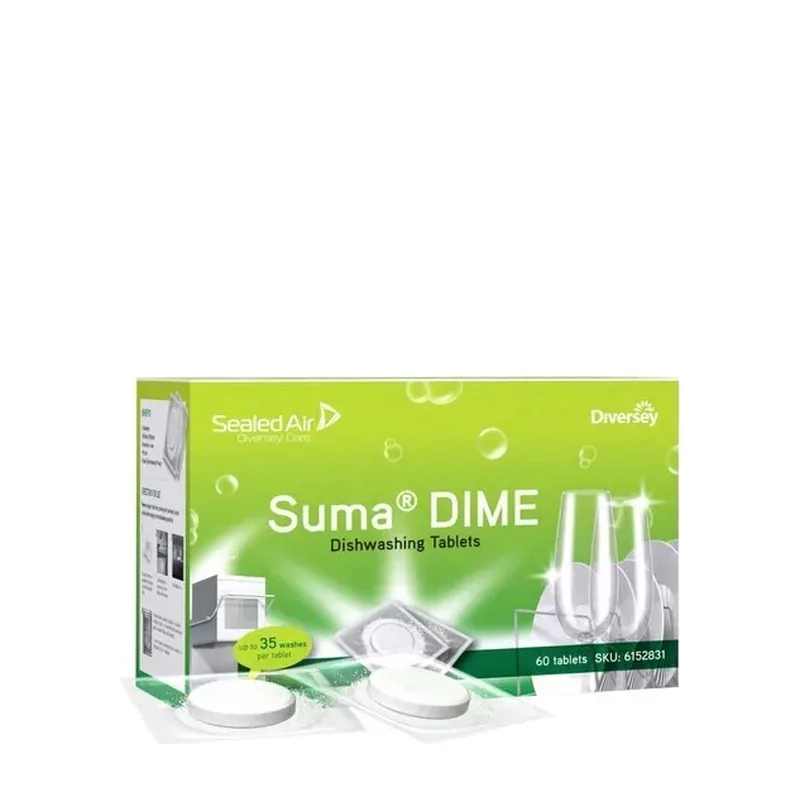
| Suma DIME | Detergent + rinse tablet | Alkaline | Undercounter or door/hood-type machines |
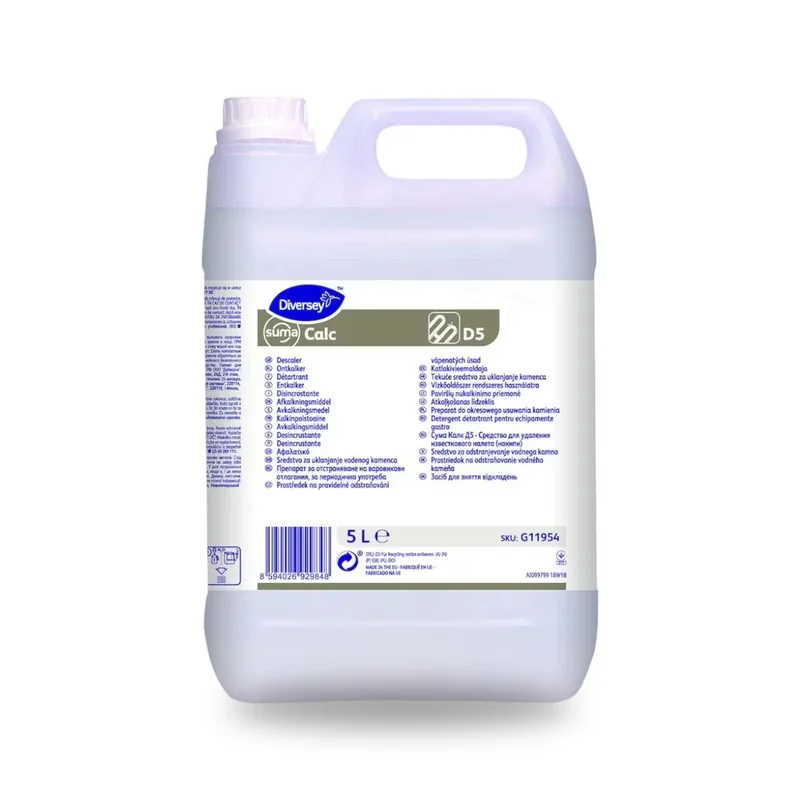
| Suma Cal-X | Descaler | Acid | Removing limescale inside the machine |
A smaller machine without a dispenser? The tablet format Suma DIME (or DIME Mini) can be a tidy shortcut.
Manual or machine — which should you choose?
The guide is volume and the type of ware. A small café with a moderate wash load is often fine with manual washing. Restaurants, hotels and catering operations with hundreds of plates per shift are usually helped by a machine. Many kitchens use both: the machine for plates and glasses, and a manual sink for large pots and pans.
Glasses still spotted? Check these three things
- Rinse aid: it has run out, or the dose is not right.
- Scale in the machine: clean it with a descaler as the label directs.
- Hard water: choose products formulated for these conditions, such as Nova L6 and Crystal A8.
Full detail on the role of each product is in the warewashing chemicals article.
Small habits, big results
Scrape leftover food before washing, separate heavily greasy items, and keep the concentrate dose consistent. Not sure how to measure it? Here is how to calculate dilution.
Count the cost per wash, too
The price per jerry can is often the main benchmark, when what matters more is the cost per wash. A correctly dosed concentrate can last far longer than a dilute product poured “by eye”. In a machine, a dispenser helps keep the dose the same from morning to night.
Record weekly usage for a month. From that you can see whether the dose is right, too wasteful, or actually too low so that plates have to be rewashed. This simple figure is often the biggest saving in the wash area.
One more thing: train everyone who works in the wash area, including part-time staff. Wash results are only consistent if everyone uses the same method and the same dose.
The bottom line: the right dishwashing liquid empties the wash area faster, leaves ware cleaner, and makes the chemical stock last longer.
Quick questions
What is the difference between ordinary and industrial dishwashing liquid? An industrial dishwash such as Suma Star D1 is a concentrate, used at a measured dose, and packed in 2x5L for commercial kitchen volumes.
Does a dishwashing machine need rinse aid? Yes. Detergent cleans; rinse aid helps rinsing and drying without spots.
Can I use a manual dishwash in the machine? Don’t. The machine needs a dedicated machine detergent such as Suma Nova L6 or Suma DIME tablets.