


It’s Already Been Sprayed — But That Doesn’t Mean It Has Worked. How to Choose the Right Hospital Disinfectant
The disinfectant has been sprayed, the surface has been wiped. Done? Not necessarily. In a hospital or clinic, one thing is often missed — and it decides whether disinfection actually works: contact time. This is a short guide to choosing the right hospital disinfectant.

1. Understand contact time
Contact time is how long a surface must stay wet with the disinfectant for its efficacy claims to be achieved. If the surface dries sooner, the result can fall short.
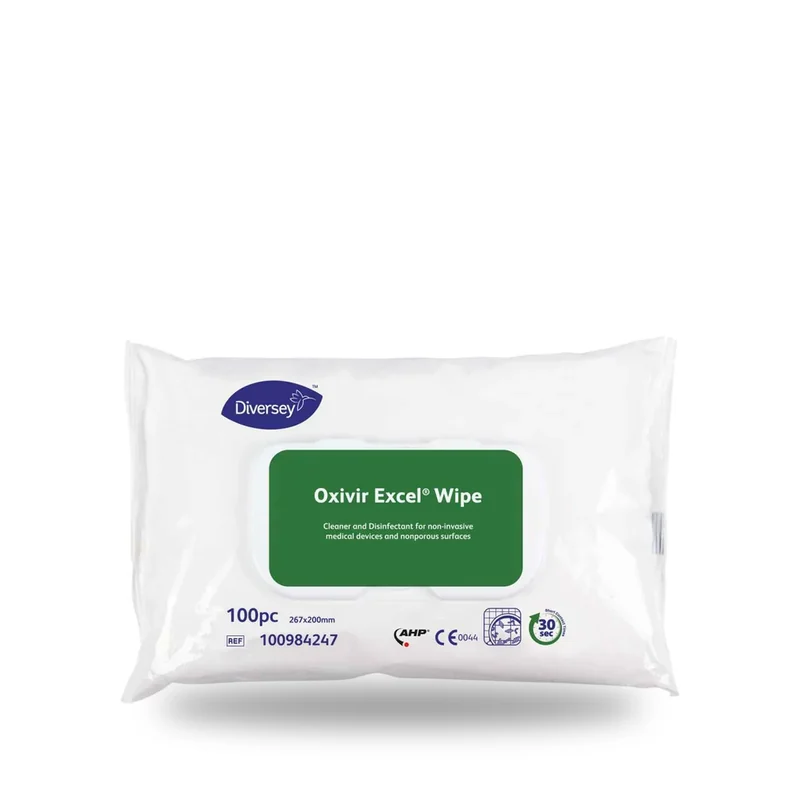
Choose a product with a contact time that is realistic for the staff workflow. Our catalogue lists a 30-second contact time for Oxivir Excel Foam and Oxivir Excel Wipes. For claims against particular microorganisms, always check the label.
2. Know the active ingredient
- Accelerated Hydrogen Peroxide (AHP): the active in the Oxivir Excel series (concentrate), Oxivir Excel Foam (ready to use) and Oxivir Excel Wipes (wipes).
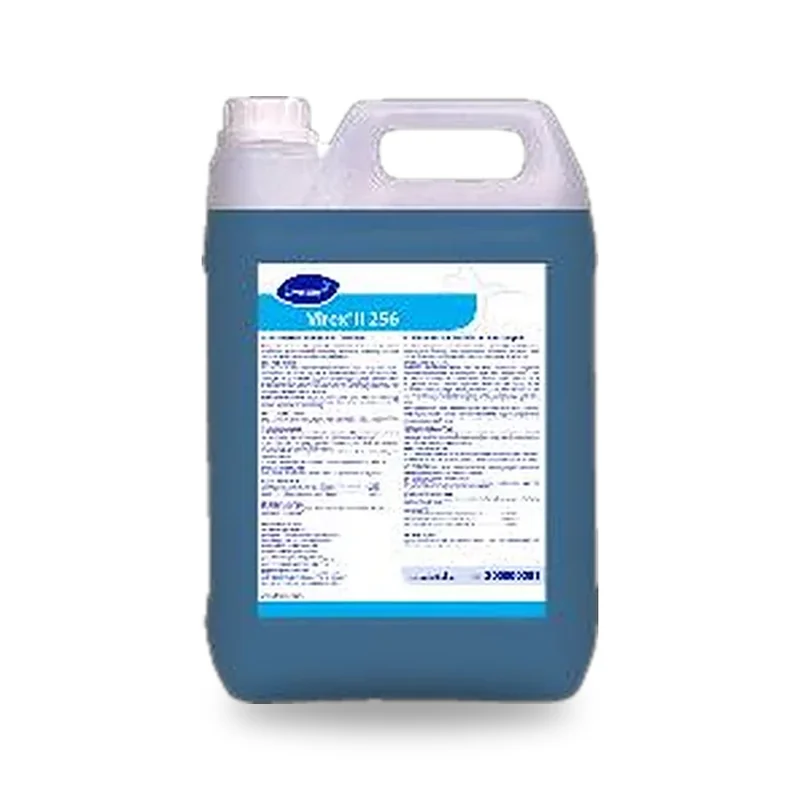
- Quaternary ammonium (quat): the active in Virex II 256, a concentrated cleaner and disinfectant with a 1:256 dilution ratio.
- Chlorine: for example Suma Titan Chlor Tab tablets for surface sanitation.
3. Choose a practical format
A concentrate is more economical for large areas such as floors and public spaces. Ready-to-use products (spray or foam) and wipes are more practical for high-touch surfaces: bed rails, patient tables, and non-invasive medical devices as the label allows.
4. Clean first, then disinfect
Organic soil can reduce a disinfectant’s effectiveness. For a dirty surface, clean it first, unless the label states that the product can clean and disinfect in one step. Follow your facility’s Infection Prevention and Control (IPC) SOP.
5. Don’t forget hands
A clean surface does not mean much if hands are not clean. WHO recommends hand hygiene at the “5 moments”: before touching a patient, before a clean or aseptic procedure, after body-fluid exposure risk, after touching a patient, and after touching the patient’s surroundings.
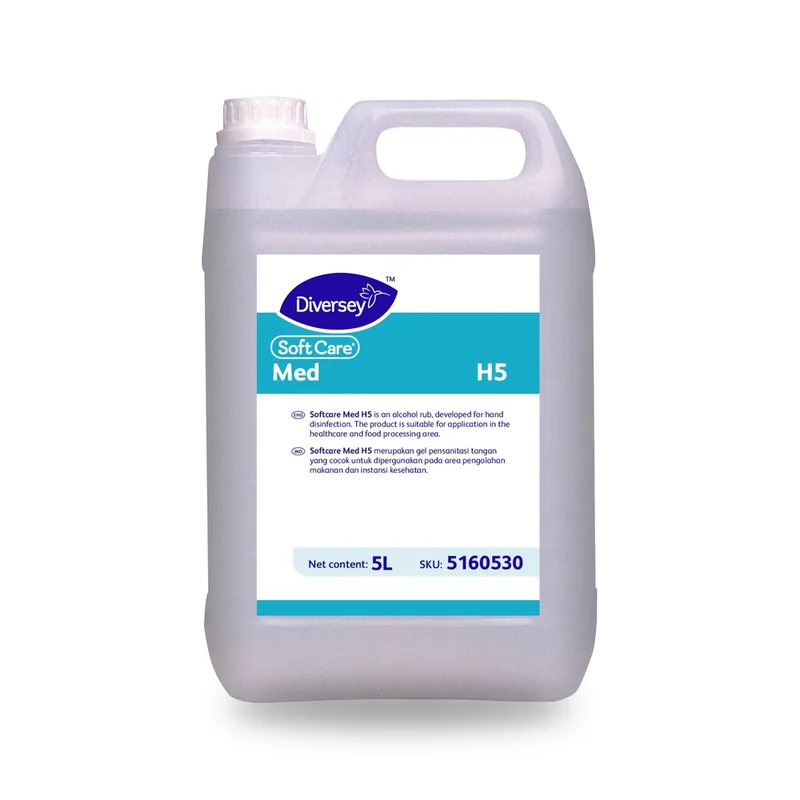
Our catalogue includes the hand sanitizers Soft Care Med H5 (gel) and Soft Care Des E H5 (liquid), and the soap Soft Care Plus H4.
Also remember: a chlorinated disinfectant must not be mixed with an acid product. Read the danger of mixing cleaning chemicals. To calculate a concentrate dose such as 1:256, see how to calculate dilution.
The reality on the ward
On a busy ward, cleaning staff are racing against time. A disinfectant that needs a long contact time often “loses” to the habit of wiping dry straight away. That is why a realistic contact time and a practical format are not just a specification issue, but a question of whether the procedure is actually followed.
A short training session and a product allocation by area help the team follow the SOP consistently.
The bottom line: the right disinfectant is the one your team can actually use every day: a realistic contact time, a practical format for each area, and consistent hand-hygiene habits to go with it. A specification on paper only matters if it is used correctly on the ward.
Quick questions
What is contact time? How long a surface must stay wet with the disinfectant for its efficacy claims to be achieved.
Concentrate or ready to use? A concentrate for large areas; ready-to-use products and wipes for high-touch surfaces.
Can you help us build a product list by room? Yes. See our Hospital & Clinic solutions or contact us.