


Is the Kitchen Ready for Nataru? A Restaurant and Hotel Kitchen Deep-Clean Checklist
Christmas and New Year, or Nataru in Indonesia, is one of the busiest periods for restaurant and hotel kitchens. Orders rise, operating hours stretch, and staff work at a high pace. If grease in the hood, deposits in the oven and the steward floor are left to build up until the peak, the risk of fire, odour and accidents rises with them. A deep clean does not replace daily cleaning. It is a special schedule before and after the busy period. Here is a checklist kitchen steward and engineering teams can use.
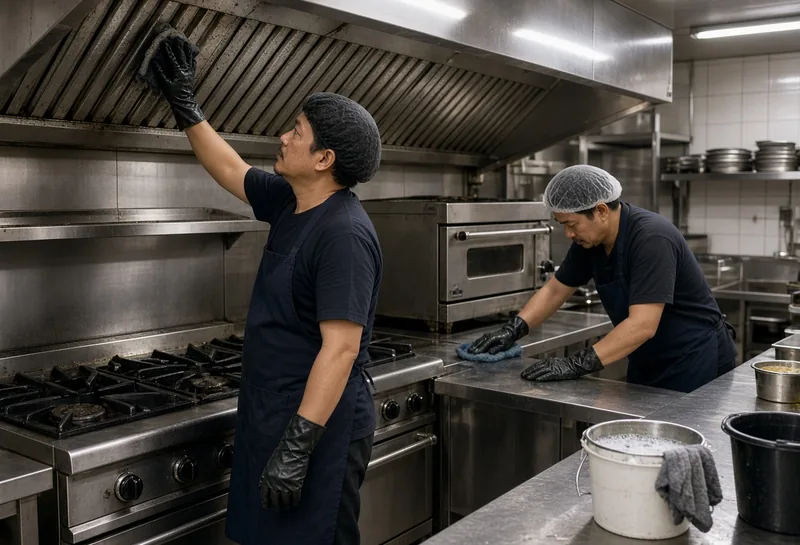
When should a kitchen deep clean be done for Nataru?
The safest approach is to schedule two rounds:
- Before the peak. Ideally 7–14 days before the busy Christmas period, while the kitchen can still be partly closed or cleaned after service.
- After the peak. After New Year’s Eve, or in the gap between Christmas and New Year if a quieter day is available, to lift the grease and deposits that built up during the rush.
A deep clean does not replace the daily and weekly restaurant kitchen cleaning schedule. In fact, a kitchen whose daily schedule is already in place will be much faster to finish when the deep clean comes around.
Safe preparation before you start
- Close or isolate the work area. Switch off and cool down ranges, ovens, fryers and grills. Do not spray a degreaser or oven cleaner onto equipment that is still hot, unless the product label clearly allows it.
- Put on PPE. Gloves, eye protection and a chemical-resistant apron, plus slip-resistant footwear. Dry the work area in stages so it does not stay slippery.
- Stage chemicals by task, and do not mix them. A degreaser for grease on tables and hoods, an oven and grill cleaner for carbon deposits, a kitchen floor cleaner for the floor, and a sanitizer for food-contact surfaces. Do not pour two products into one bucket “to make them stronger.” Read the danger of mixing cleaning chemicals and how to calculate dilution.
- Check stock and labels. Make sure the packaging is original, the dose is readable, and you have enough tools: a dosing bucket, brushes, cloths, a safe ladder for the hood, and wet-floor signs.
- Remove leftover food and excess oil before chemicals are used, including emptying the grease trap according to kitchen SOP, so you are cleaning a surface, not a pile of soil.
Checklist by area
1. Hood, filters and the ventilation area
- Remove the hood filters, soak or spray them according to SOP, and clean the baffles and the grease-collection trough.
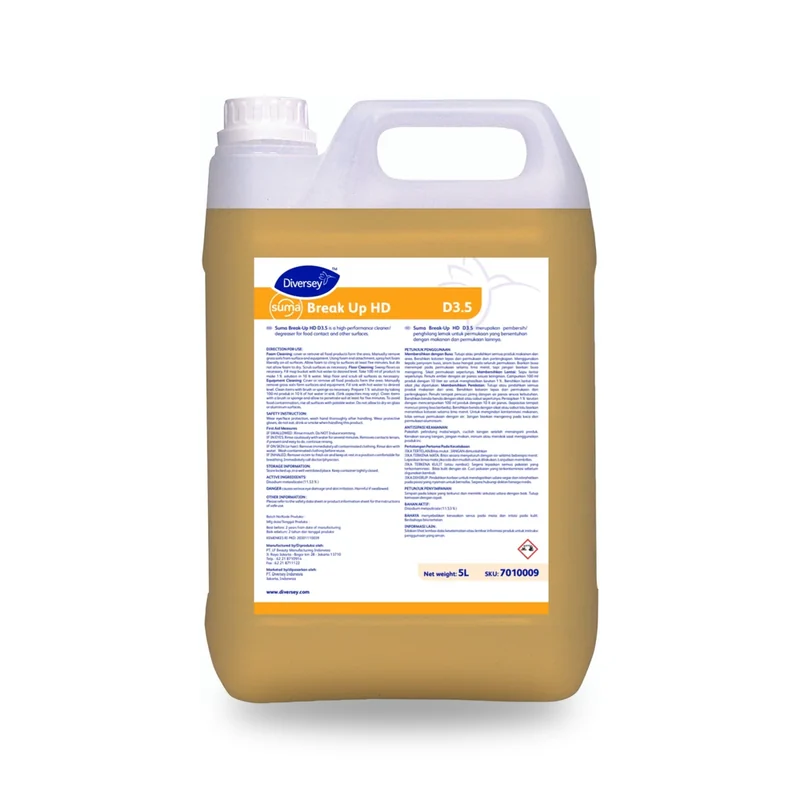
- Lift the grease film inside and outside the hood, on splashback walls, and on the ceiling near the cook line. For grease on hard surfaces such as the hood, walls and tables, use a kitchen degreaser, not dishwashing liquid. Suma Break Up D3.5 is Diversey’s concentrated degreaser for soil, oil, animal protein and blood on hard surfaces. How to choose and use it is in our kitchen degreaser article.
- Check hood lights and cable runs so they are not over-wetted. For ducting beyond the steward’s reach, involve engineering or a hood contractor, following fire-safety rules.
2. Oven, grill and fryer
- Let equipment cool completely. Dispose of spent fryer oil according to procedure; do not pour it down an ordinary drain if kitchen SOP forbids it.
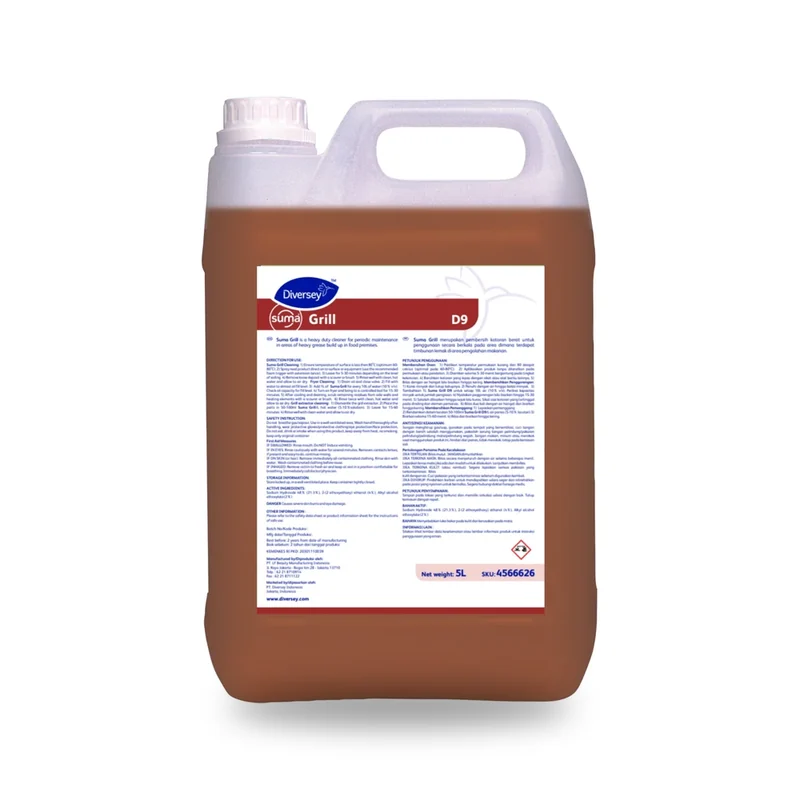
- Black carbon deposits on an oven or grill are not a job for an ordinary degreaser. Use an oven and grill cleaner, for example Suma Grill D9, an oven and grill carbon cleaner designed to penetrate carbon soil. Follow the contact time on the label, then rinse.
- Clean oven doors, racks, trays and oil-soaked pans. See also how to choose an oven cleaner.
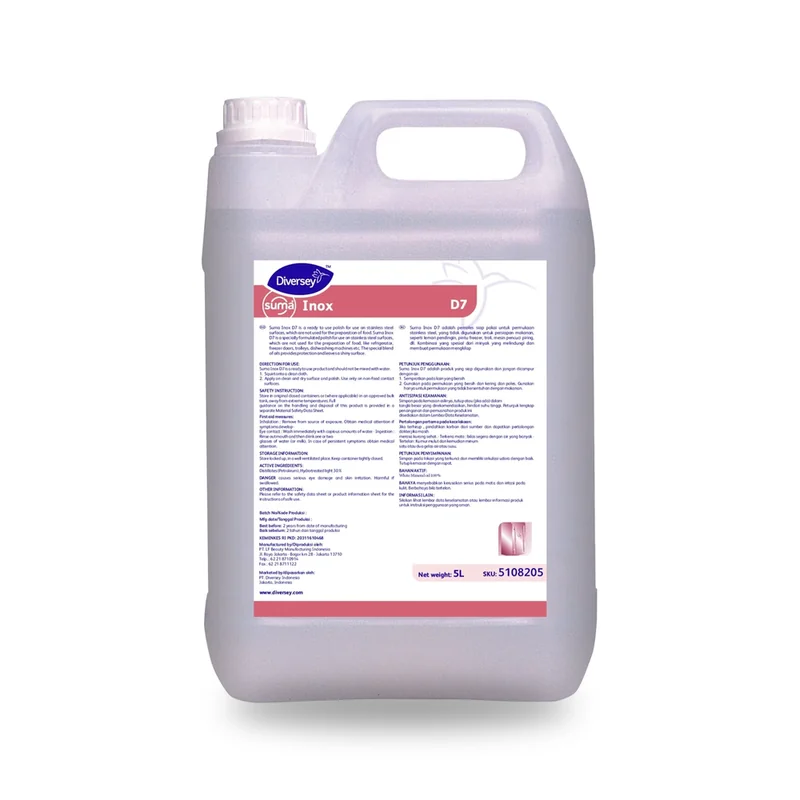
- Wipe the stainless exterior after rinsing, then polish if needed with Suma Inox D7, a stainless polish that forms a protective film.
3. Worktops, walls and smallware
- Clear the tables, then degrease work surfaces, wall cladding, switches that can safely get damp, and spice racks (after containers have been moved).
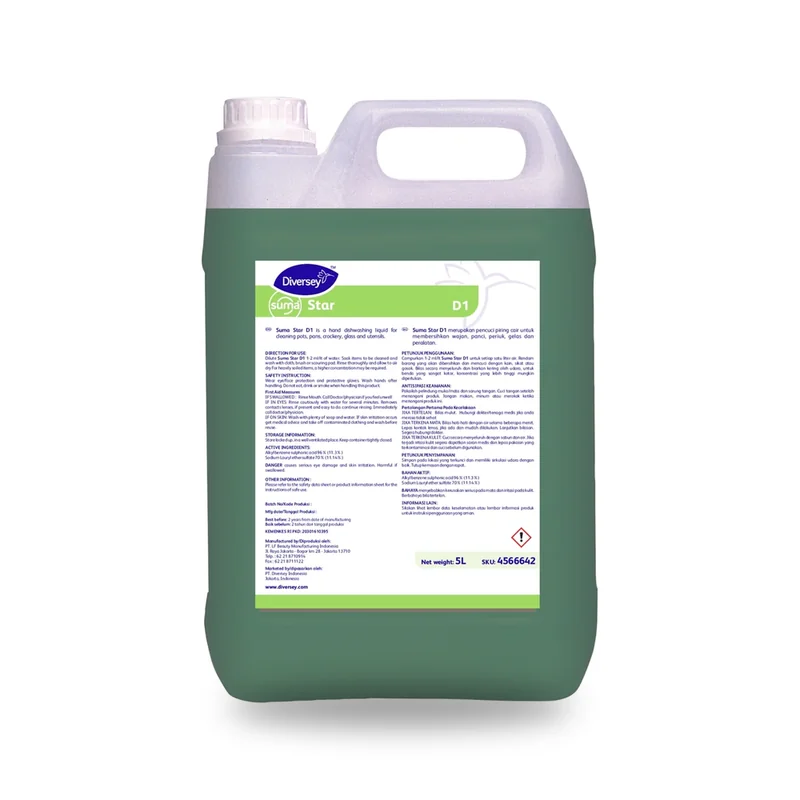
- Wash smallware, trays and utensils in the sink with a manual dish detergent such as Suma Star D1, not with the hood degreaser.
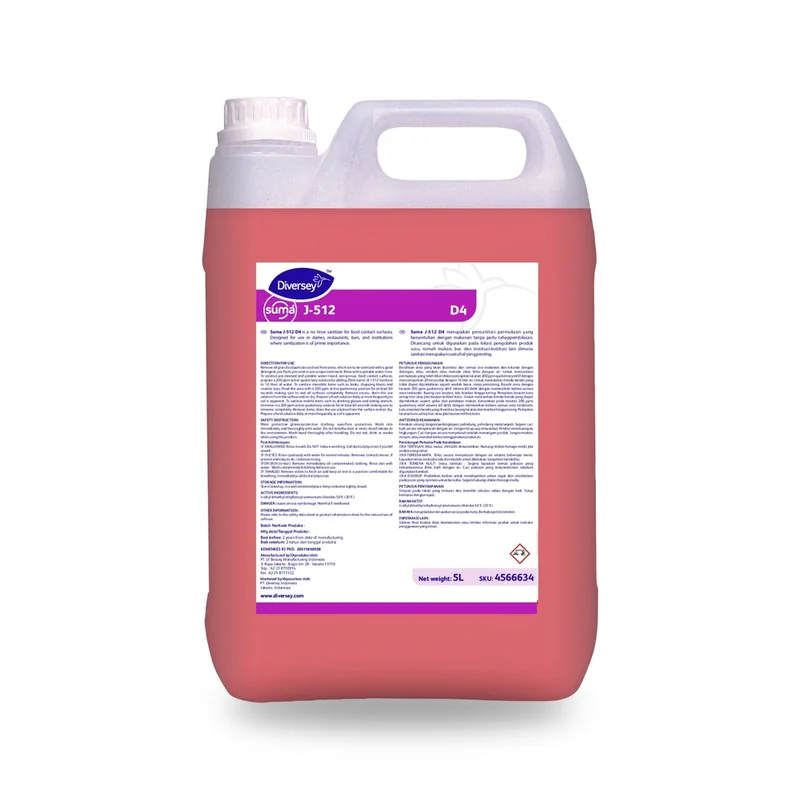
- Once clean, sanitize food-contact surfaces with a sanitizer according to the label, for example Suma J512, a high-concentration no-rinse sanitizer. The difference between a sanitizer and a disinfectant is explained in disinfectant or sanitizer.
4. Floors, drains and steward routes
- Remove mats, scrape soil from corners and from under equipment that can be moved safely.
- Mop with a kitchen floor cleaner, not dishwashing liquid. Suma Bio-Floor Cleaner is a no-rinse biological kitchen-floor cleaner and deodorizer.
- Inspect drains and the grease trap (on the schedule, and by the person authorized to do it). Leave wet-floor signs out until the floor is dry.
5. The warewash area and the machine
- Clean the dirty table, strainers and machine jets according to the manufacturer’s SOP.
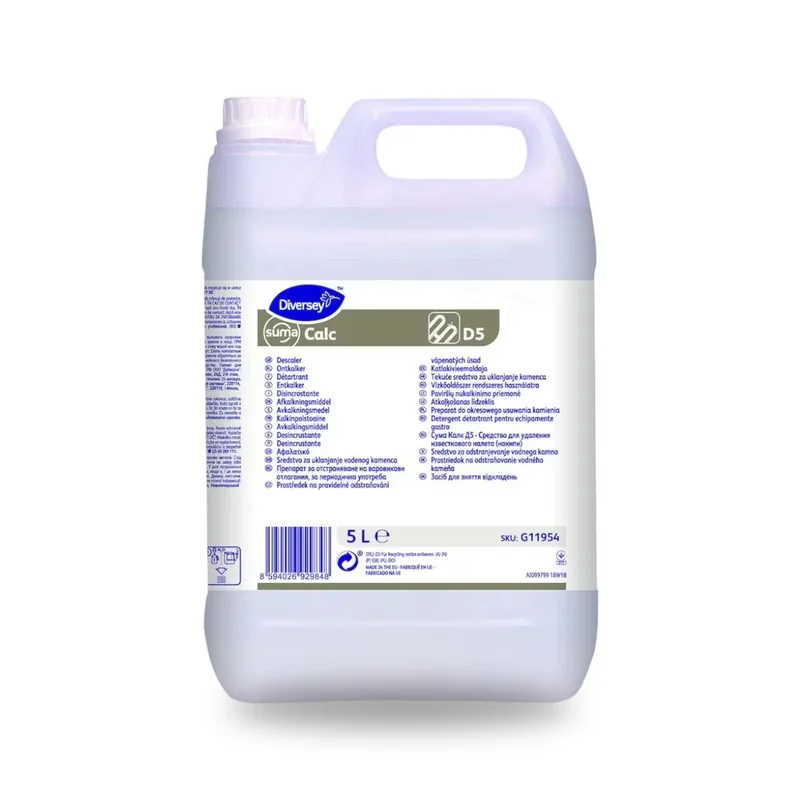
- If there is limescale in the machine, bain-marie or water heater, use the right descaler, for example Suma Cal-X, a descaler for dishwashing machines, bain-maries, water heaters, and tea and coffee urns. Do not mix it with an alkaline cleaner.
- Run a machine cleaning cycle if the SOP calls for it, then check the results on glasses and plates. The warewash chemical guide is in dishwashing-machine chemicals.
6. Chillers, freezers and storage
- Move food to a backup unit or a safe cooler box and keep the cold chain intact.
- Clear ice and defrost according to SOP, then clean shelves, door gaskets and the interior floor. Use a cleaner that suits the surface and has a supervisor’s approval; do not use an oven cleaner or a strong degreaser inside a chiller unless the label and kitchen SOP allow it.
- Dry the unit, restock FIFO, and discard damaged packaging or expired items before the Nataru rush.
- Clean the dry store, packaging racks, and the waste or loading area so they do not become a pest source when waste volume rises.
7. Close-out and documentation
- Rinse or wipe leftover chemical according to the label, dry the floor, and remove signs only when the area is safe to walk on.
- Refit hood filters, oven racks and mats.
- Fill in a dated checklist, with the operator’s and supervisor’s names, plus notes on any defects (hood lights, leaks, chiller doors) for engineering.
- Return chemical stock to the store room, closed, separated by type, and kept away from food.
Chemicals most often used in a deep clean
A full list by task is in restaurant kitchen cleaners by task and the kitchen specialty cleaners category. In short:
- Suma Break Up D3.5 — degreaser for greasy hoods, walls and tables
- Suma Grill D9 — carbon deposits on ovens and grills
- Suma Bio-Floor Cleaner — kitchen floors
- Suma Star D1 — manual dishwashing and utensils
- Suma Cal-X — limescale in machines and heaters
- Suma J512 — surface sanitizing
- Suma Inox D7 — stainless polish after cleaning
Sanitra is an Authorized Distributor of Diversey. These products are supplied in Diversey factory packaging. To match doses and the work sequence to your kitchen layout, our team can help with a demo and staff training before the Nataru period.
Frequently asked questions
When is the best time to deep-clean a kitchen before Nataru?
Do it 7–14 days before the Christmas peak, then repeat after the busy period or in the gap between Christmas and New Year if operations allow.
How is a deep clean different from daily kitchen cleaning?
Daily cleaning keeps grease and food soil from building up every shift. A deep clean lifts deposits in the hood, oven, under equipment, in the chiller, and in areas that are rarely reached on a normal day.
Which degreaser is used for a greasy hood and tables?
For grease on hard surfaces, our catalogue uses Suma Break Up D3.5. For black deposits on ovens and grills, use a specialist cleaner such as Suma Grill D9, not a table degreaser alone.
Can a deep clean be done while the kitchen is still operating?
Some areas can, but the hood, oven and chiller are safer to do when the equipment is cold and the area is closed. Do not spray chemicals onto hot equipment unless the label allows it.
What should you not do during a deep clean?
Do not mix chemicals, do not use dishwashing liquid on the hood or the kitchen floor, and do not skip PPE or wet-floor signs. Follow the dose on the label.