


Slippery Floors When It Rains? A Rainy-Season Floor Safety Guide for Hotels and Restaurants
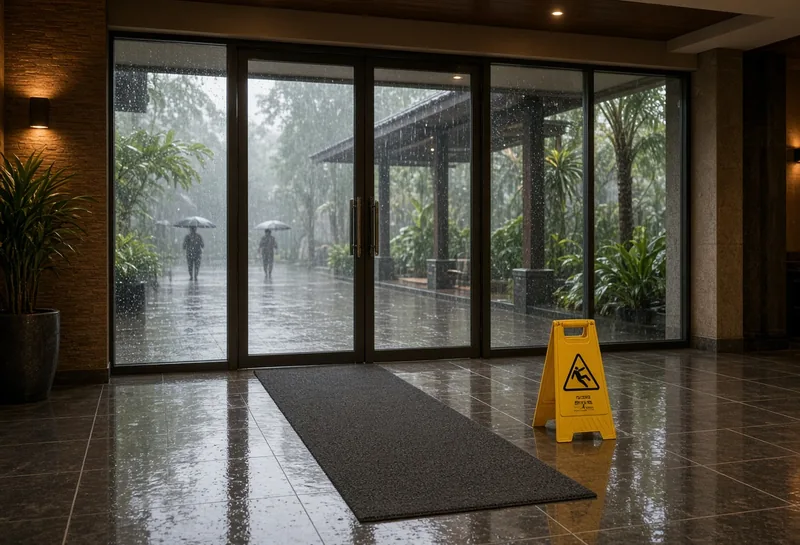
When the rainy season arrives, hotel, restaurant, mall and office entrances turn into wet paths. Water from umbrellas, shoes and already-soaked mats leaves a thin film on glossy tile or granite. Add detergent residue or kitchen grease, and the floor becomes far more slippery. Floor safety in the rainy season is not only about mopping more often. It means planning the entrance, the signage and the chemicals so they do not leave a slippery residue.
Why are floors more slippery in the rainy season?
Water alone is enough for many floor types, especially glossy or freshly coated surfaces, to lose grip. The risk rises further when that water mixes with:
- dust, soil and oil from guest or staff shoe soles;
- kitchen grease carried onto corridors or service routes;
- soap or chemical residue left behind because the dilution was too strong.
In a restaurant, the most dangerous mix is often at the boundary between the kitchen and the guest area: wet shoes plus a floor that already has a grease film. In a hotel, the usual hot spots are the main entrance, the drop-off, areas near the lifts, and the route to a restaurant or ballroom when people come in wet from outside.
Secure the entrance: mats, umbrellas and the wet path
Most of the water can be stopped at the door, before it spreads across the lobby. Set up the entrance like this:
- A scraper mat outside. Under the canopy or on the terrace, use a textured mat or grille that scrapes mud and water off shoe soles. Make sure this area does not become a puddle.
- An absorbent mat inside. Fit a moisture-absorbing mat long enough for several footsteps, not just a small piece on the threshold. A short mat often does not have time to dry a guest’s shoes.
- Change or wring mats before they are saturated. A soaked mat actually spreads water. Keep spare mats ready in the rainy season, and check them more often during heavy rain.
- An umbrella stand and a water broom. Provide an umbrella stand or umbrella bags at the door, plus a tool to push incoming water, so staff are not relying on a mop alone.
Also map other wet routes: the staff side door, the loading dock, access from the car park, and kitchen doors that open to the outside. These points are often missed, even though staff walk water and soil inside all day.
Wet-floor signs: put them out before someone slips
A “caution: wet floor” sign is not a follow-up after an incident. Put signs out as soon as the floor starts to get wet, or before mopping, on every side of the slippery zone so people see them as they approach.
- Do not remove a sign until the floor is truly dry, not just “slightly damp.”
- When rain lasts for hours, leave a sign at the entrance and add signs along any path that has just been mopped.
- Make sure you have enough signs for a wide lobby, corridors and the restaurant; one sign in the corner of a room is often invisible.
Train front-office, security and housekeeping staff so that whoever first sees a puddle may put a sign out, without waiting for a long instruction chain.
How to mop without making the floor more slippery
Mopping with too much water, or with a chemical that is too concentrated, leaves a slippery film after it dries. A few practical rules:
- Work zone by zone, rather than flooding the whole lobby at once.
- Remove coarse soil first, then mop with a solution diluted as the label requires.
- Reduce standing water: wring the mop well, and if needed follow with a dry mop or a dryer after the wet mop.
- Increase how often you mop the entrance during rain, while still keeping the amount of water under control.
- Do not mix several cleaners “to make them stronger.” That is hazardous and can leave residue. See also the danger of mixing cleaning chemicals and how to calculate concentrate dilution.
Choose a floor cleaner that matches the area
There is no single cleaner for every floor. Choose according to the soil and the surface, then follow the dose on the label. A breakdown by floor type is in our guide to floor cleaners for buildings and hotels.
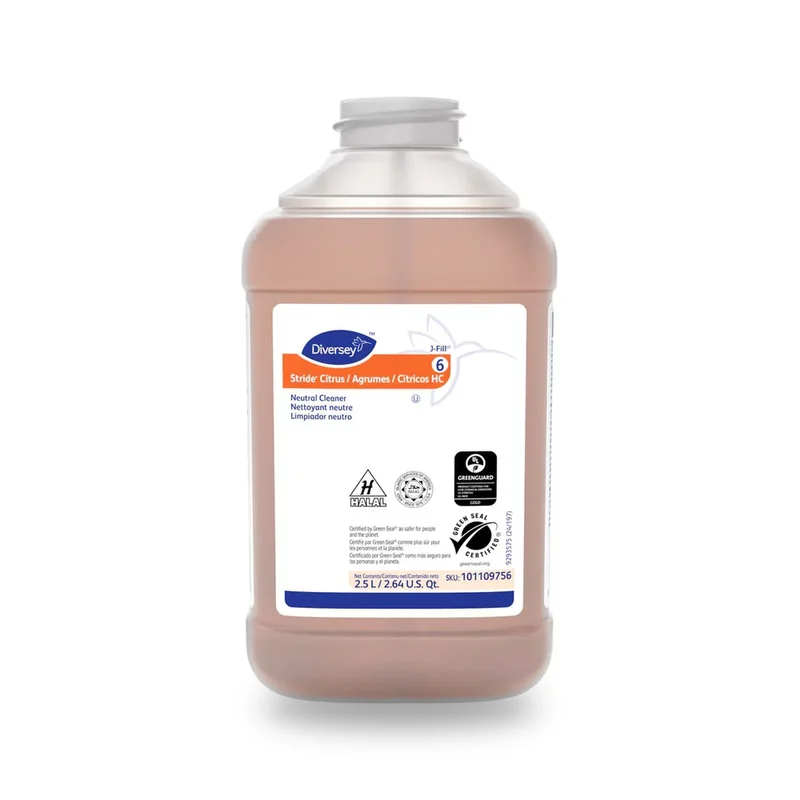
- Lobbies, corridors and public areas. For daily cleaning of floors, walls and other surfaces, our catalogue uses Stride Citrus HC Neutral Cleaner, a high-concentration non-alkaline neutral multipurpose cleaner. Because it is neutral, it is suitable for everyday care without “biting” into the floor finish.
- Kitchen floors. Rainwater on staff shoes, plus kitchen grease, makes the steward floor very slippery. Use a kitchen floor cleaner, not dishwashing liquid. Suma Bio-Floor Cleaner is a no-rinse biological kitchen-floor cleaner and deodorizer with non-pathogenic bacteria, surfactants and solvents.
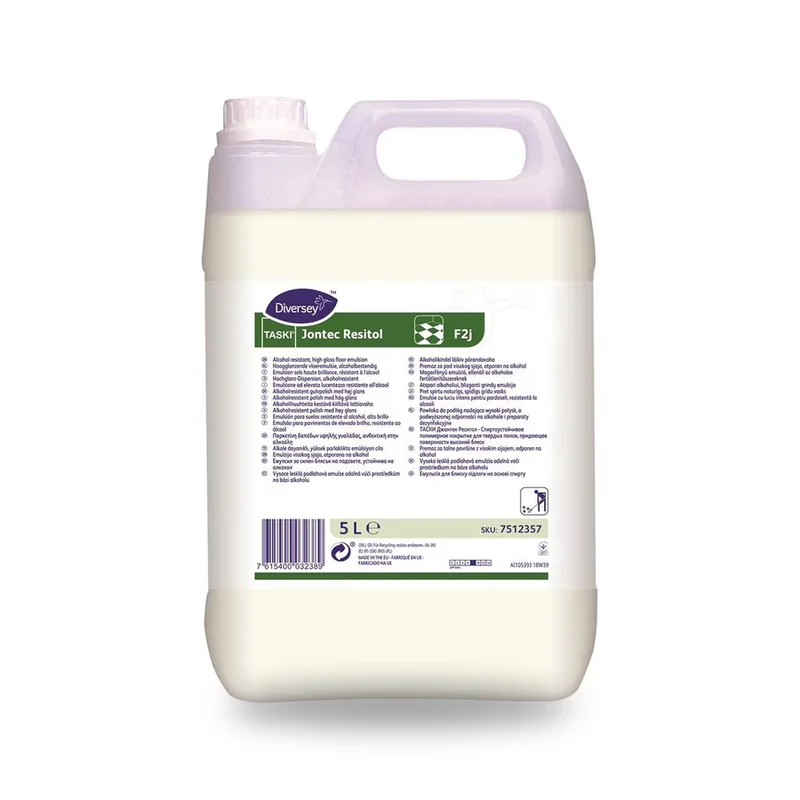
- A non-slip gloss finish. If a public floor needs protection and shine, choose an emulsion designed not to be slippery. TASKI Jontec Resitol is a floor emulsion with a special polymer and wax blend, described in the catalogue as providing shine without being slippery. Do not try to fix a dull look by spraying a random fragrance or soap over the coating.
- Washrooms and other wet rooms. Toilet floors are also higher risk in the rain because traffic increases. Follow the housekeeping chemicals that match the area, for example the TASKI R1–R9 range. See hotel housekeeping chemicals TASKI R1 to R9.
A gloss finish, spray buff or marble crystallization is not a substitute for rainy-season procedure. Work such as stripping, recoating or crystallization still follows the maintenance schedule, and should not be done on a floor that is wet from rain. For that, see how to strip and recoat a floor and how to crystallize a marble floor.
A short rainy-season floor-safety checklist
- The main entrance and staff doors have an outside scraper mat and an inside absorbent mat that is long enough.
- Spare mats are ready to swap in when the entrance mats are saturated.
- Wet-floor signs are available at the door, in the lobby and near any area being mopped; staff know they may put them out immediately.
- Entrance mopping is increased during rain, with a well-wrung mop and zones dried in stages.
- Chemical dilution follows the label; products are not mixed.
- Kitchen floors are cleaned with a kitchen floor cleaner, not dishwashing liquid, especially on steward entry and exit routes.
- Puddles at the canopy, ramp and loading dock are checked so water does not flow indoors.
- Any slip incident is recorded (location, time, floor condition) so the same point can be fixed.
Sanitra is an Authorized Distributor of Diversey. The products above are supplied in Diversey factory packaging. For dilution, a demo or housekeeping-staff training, our team can help match the procedure to the floors at your site.
Frequently asked questions
What makes a hotel or restaurant floor slippery in the rainy season?
Water from shoes and umbrellas mixes with dust, soil, oil or soap residue on a glossy floor. Entrances and kitchen routes are usually the highest risk.
Are mats alone enough to prevent slips?
Mats matter, but they must be long enough, must not be left saturated, and need to be paired with wet-floor signs and regular mopping. A wet mat that is not changed actually spreads water.
Which floor cleaner is suitable for everyday lobby use?
For daily cleaning of public areas, our catalogue uses Stride Citrus HC Neutral Cleaner, a concentrated neutral multipurpose cleaner. Follow the dilution on the label so it does not leave a residue.
What about a kitchen floor that is slippery from grease and rainwater?
Use a kitchen floor cleaner such as Suma Bio-Floor Cleaner, not dishwashing liquid. Clean the staff entry routes more often, and put out a sign if the floor is still wet.
Does a gloss finish make the floor more slippery?
It depends on the product and how it is applied. TASKI Jontec Resitol is designed to add shine without being slippery. Do not apply a coating on a wet floor, and do not replace rainy-season procedure by adding a sudden extra layer.